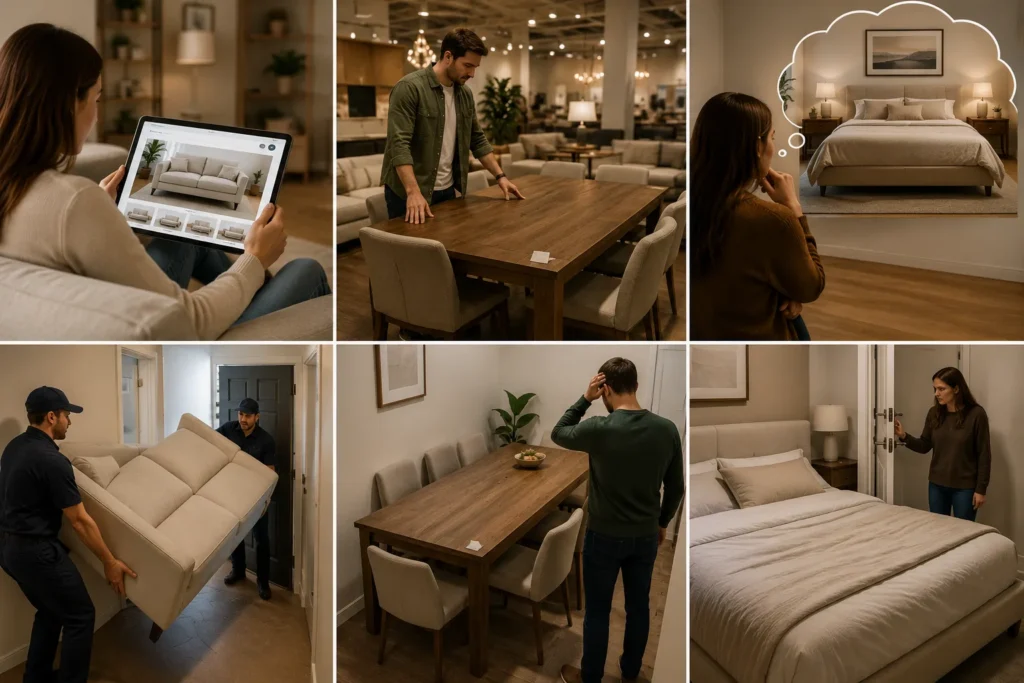
Buying new furniture feels exciting at first. You look at a soft couch online, a big dining table at the store, or a cozy bed for your bedroom and think, “This will look perfect in my house.” Then the furniture arrives, and suddenly the room feels too tight. The sofa blocks the walkway. The table sits too close to the wall. The bed barely leaves space for the door to open.
This happens more often than people think.
A friend of mine once bought a huge sectional sofa because it looked amazing in the showroom. In the store, the sofa looked normal. But when delivery day came, the sofa almost touched every wall in the living room. There was barely enough space to walk around it. The room felt crowded, and the family had to move other furniture outside.
The problem was not the sofa.The problem was measuring. Learning how to measure room for furniture like a pro can save money, time, and stress. The good news is that it is not hard. You do not need to be an interior designer or an architect. You just need a measuring tape, a little patience, and a simple plan.
Why Measuring Your Room Matters
Furniture is one of the biggest things inside a home. A sofa, bed, dining table, or bookshelf can change how a room feels. When furniture is too large, the room feels packed. When furniture is too small, the room can feel empty and strange.
Good room planning helps create balance.
When people measure correctly, they can:
- make the room feel open,
- improve traffic flow,
- leave enough walkway space,
- avoid delivery problems,
- choose the right furniture dimensions,
- and create a comfortable furniture layout.
Many people skip this step because they think they can “guess” the size. But our eyes can trick us. A couch in a giant showroom may look small, but inside a smaller living room, it may take over the whole space.That is why accurate measurements matter.
Start With the Right Tools
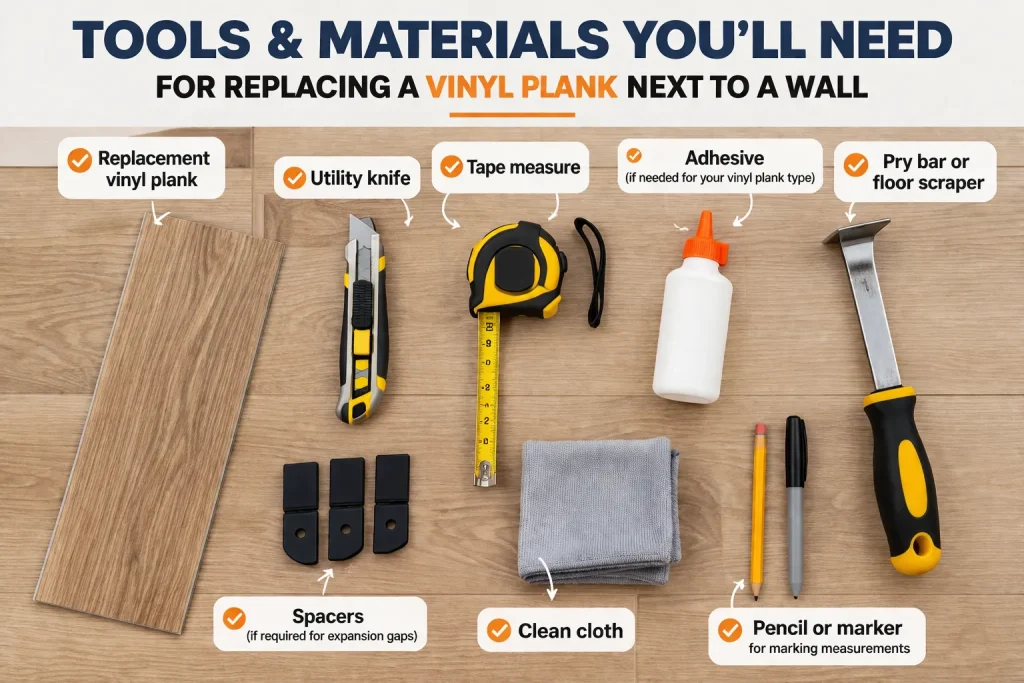
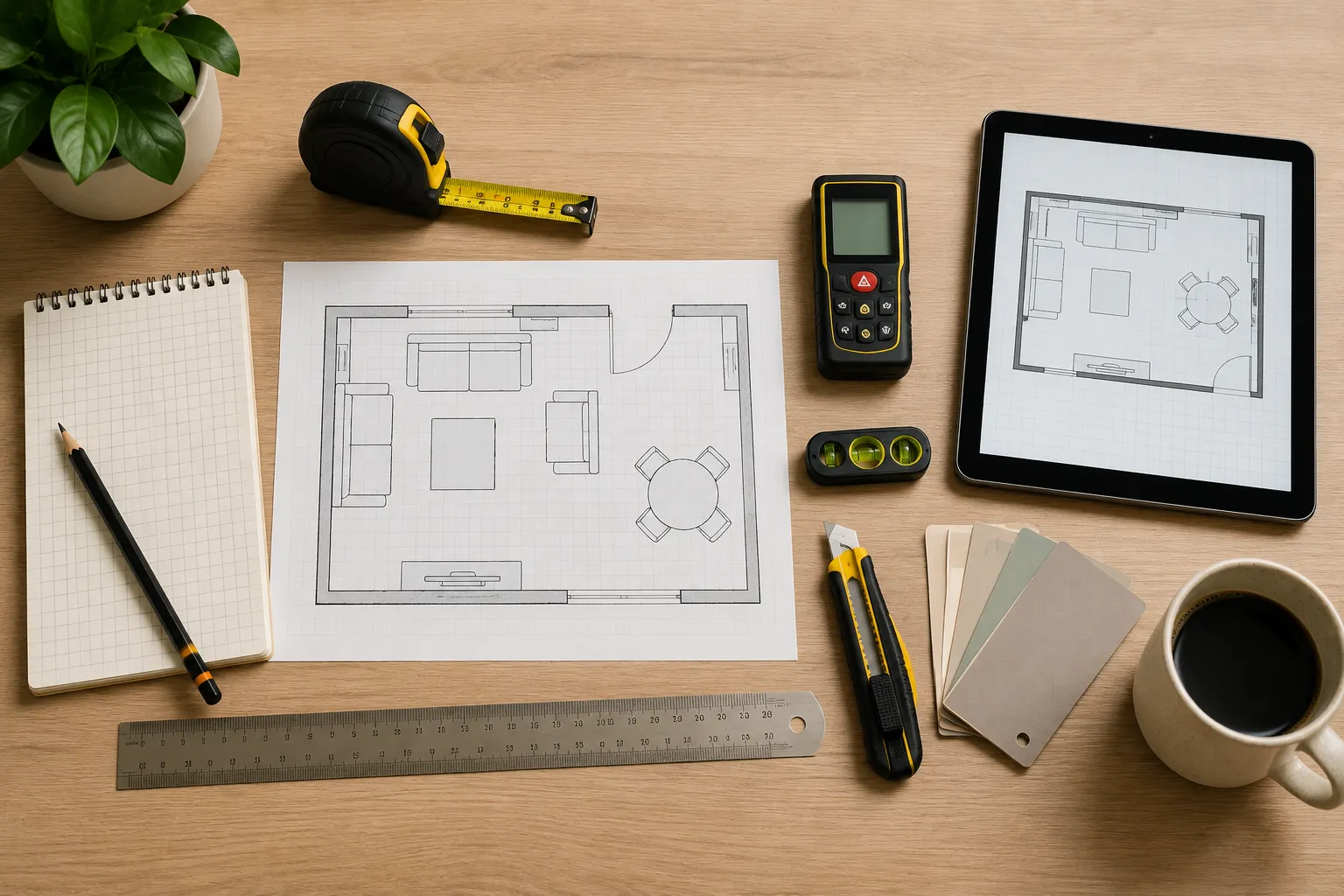
You do not need expensive tools to measure a room. Most people already have everything at home.
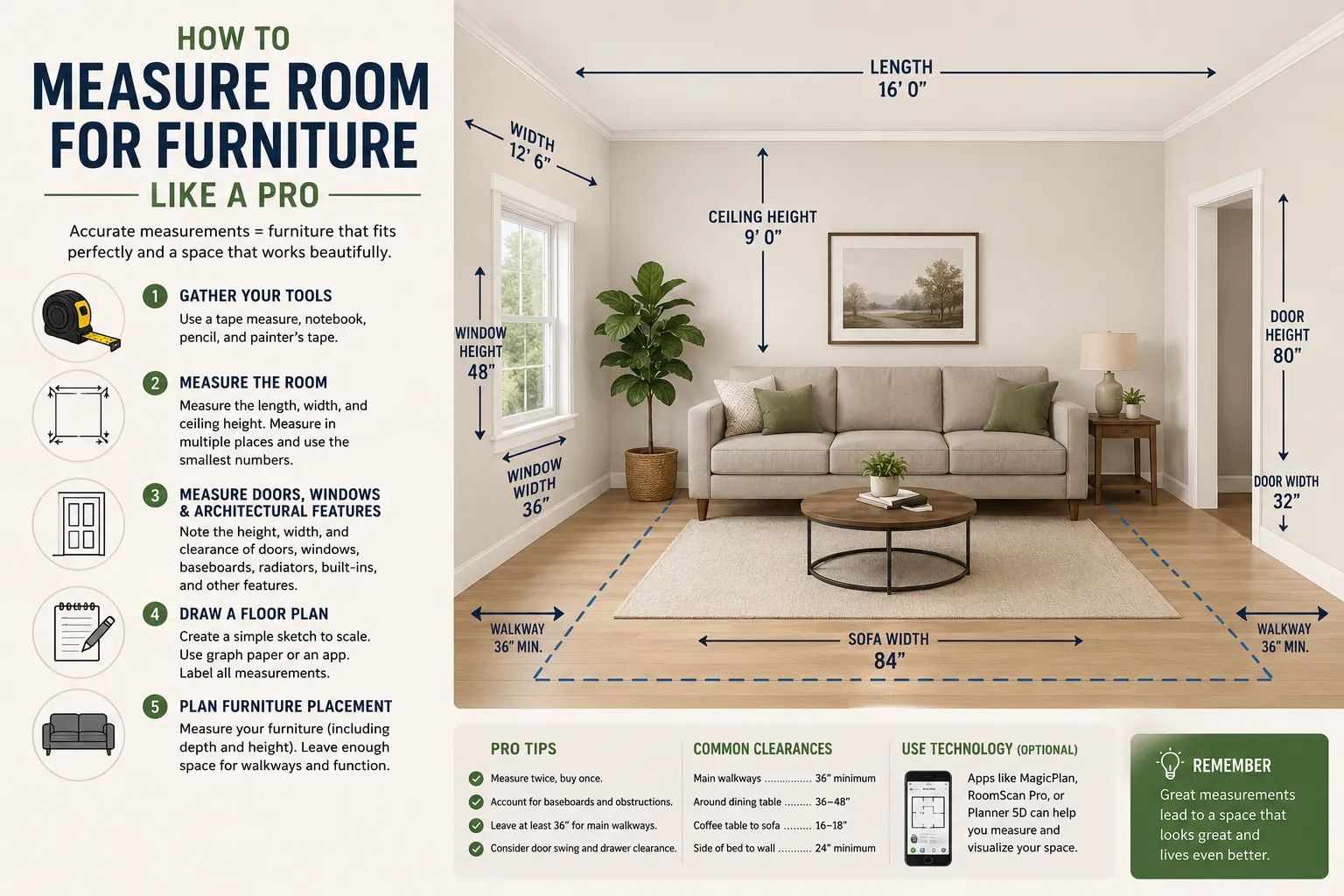
A measuring tape is the most important tool. A notebook or phone can help you write down the numbers. Some people also use graph paper to sketch a floor plan. Painter’s tape is helpful too because you can place it on the floor to show where furniture will sit.
If you want to feel like a pro, keep all the measurements in one place. Write down the room dimensions, doorway width, hallway measurements, and furniture sizes together. It makes shopping much easier later.
Measure the Length and Width of the Room
The first step is measuring the room itself.
Start at one wall and stretch the measuring tape all the way to the opposite wall. This gives you the room length. Then measure the other side for the width.
For example, your living room may be 14 feet long and 12 feet wide.
Write every number down carefully.
Do not trust memory because numbers are easy to forget. Even being off by a few inches can create furniture placement problems later.
Some rooms are not perfect squares. They may have corners, windows, fireplaces, or small bumps in the walls. Measure those areas too because they affect available space.
Do Not Forget the Ceiling Height
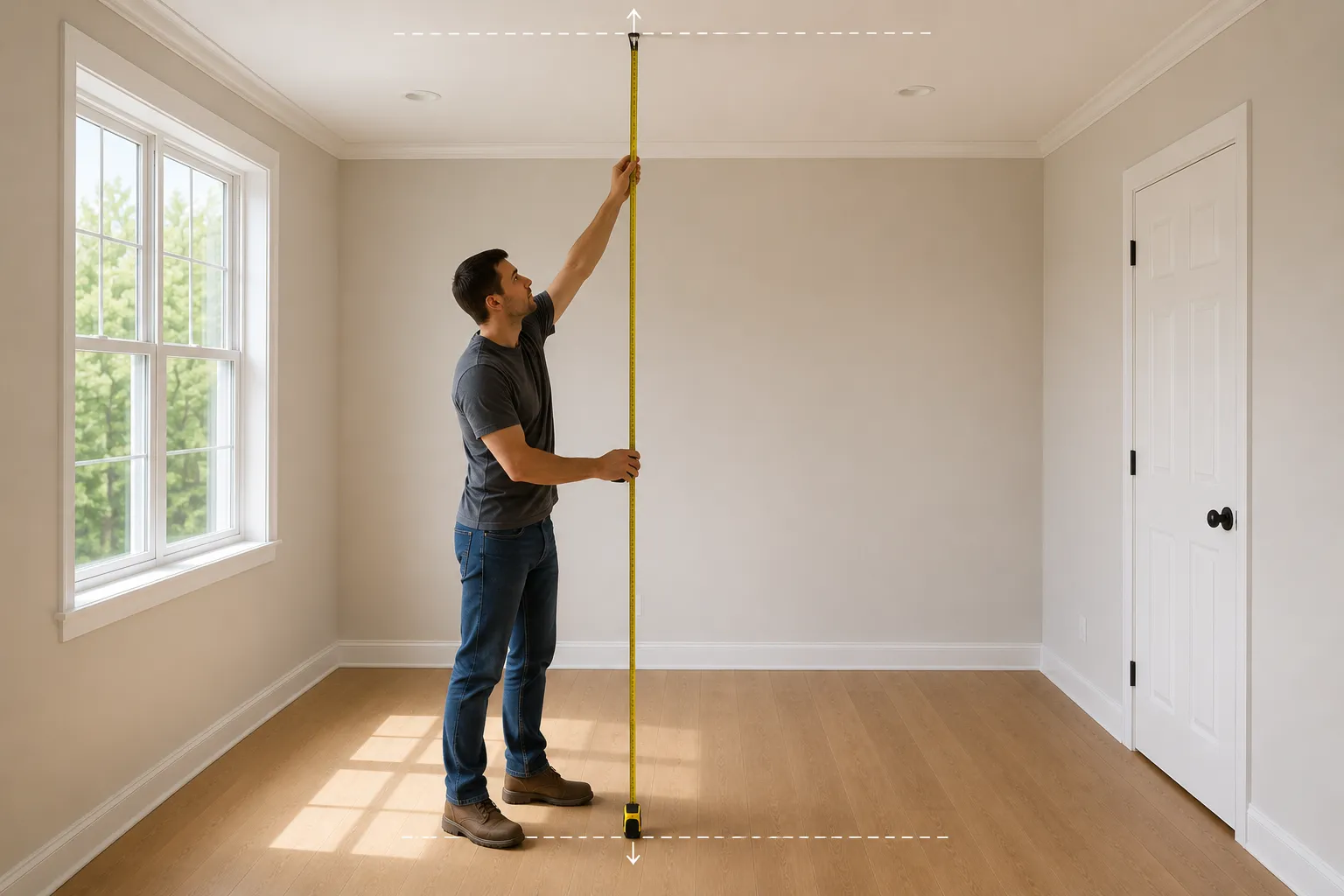
Most people only measure the floor. But smart furniture planning also includes ceiling height.
Tall bookshelves, cabinets, bunk beds, and wardrobes need vertical space. A beautiful tall cabinet may fit the floor perfectly but still hit the ceiling fan or feel too tall for the room.
Measure from the floor to the ceiling and write it down with the other room measurements.
This step is especially important in apartments and smaller homes.
Measure Doors, Hallways, and Stairs
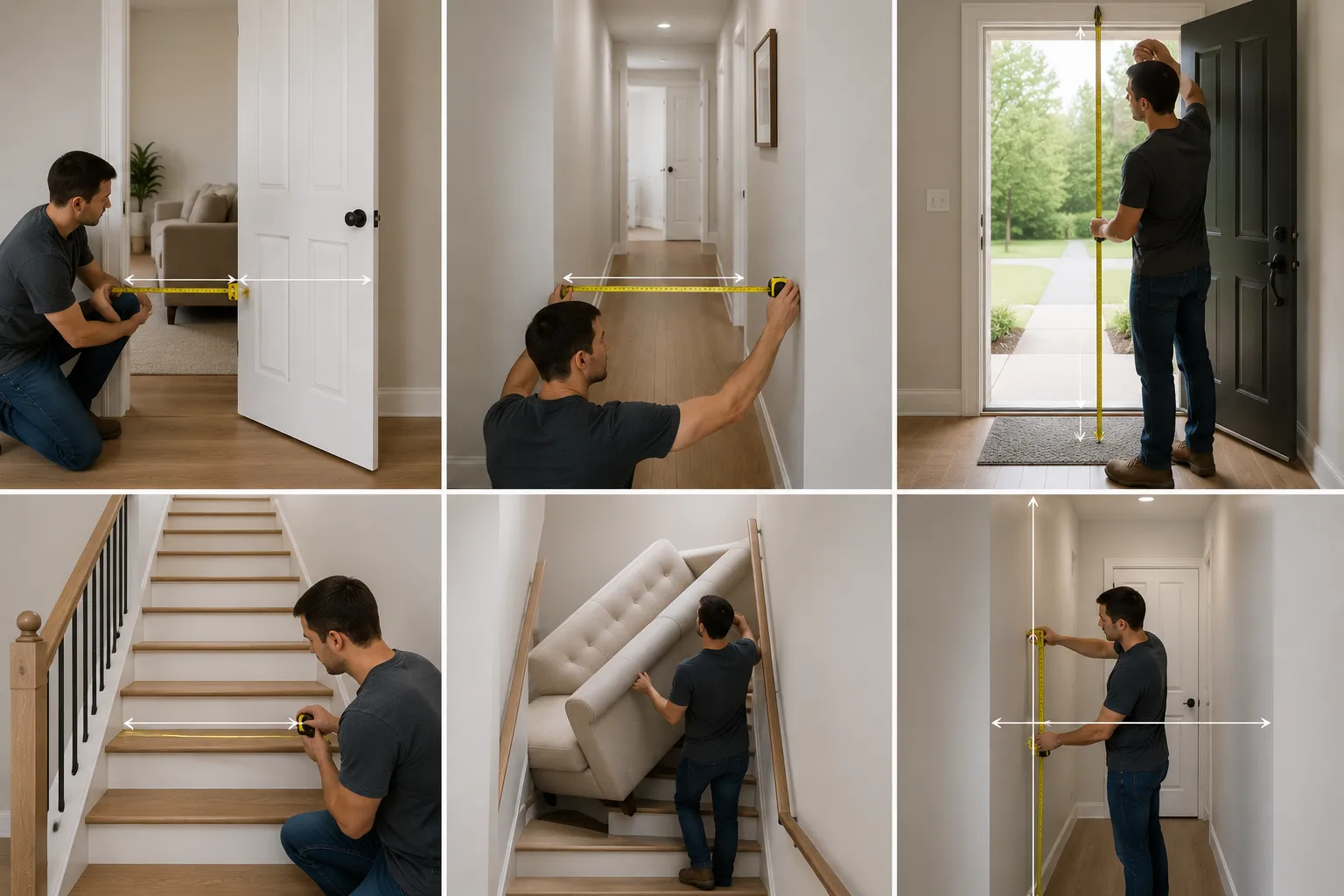
This is the step many people forget.Imagine buying the perfect sofa and then finding out it cannot fit through the front door.It happens all the time.Professional movers always check the delivery path first. That means measuring:
- doorways,
- hallways,
- staircases,
- elevators,
- and tight corners.
A dining table may fit your dining room perfectly, but if the hallway is too narrow, delivery becomes a nightmare.One family even had to return a couch because it could not make the turn near their staircase. They measured the room but forgot the path into the room.
That mistake cost them extra delivery fees. Always measure the entire path before buying large furniture.
Think About Walkways and Space to Move
A room should not only look good. It should also feel easy to move around in.
This is where traffic flow becomes important.
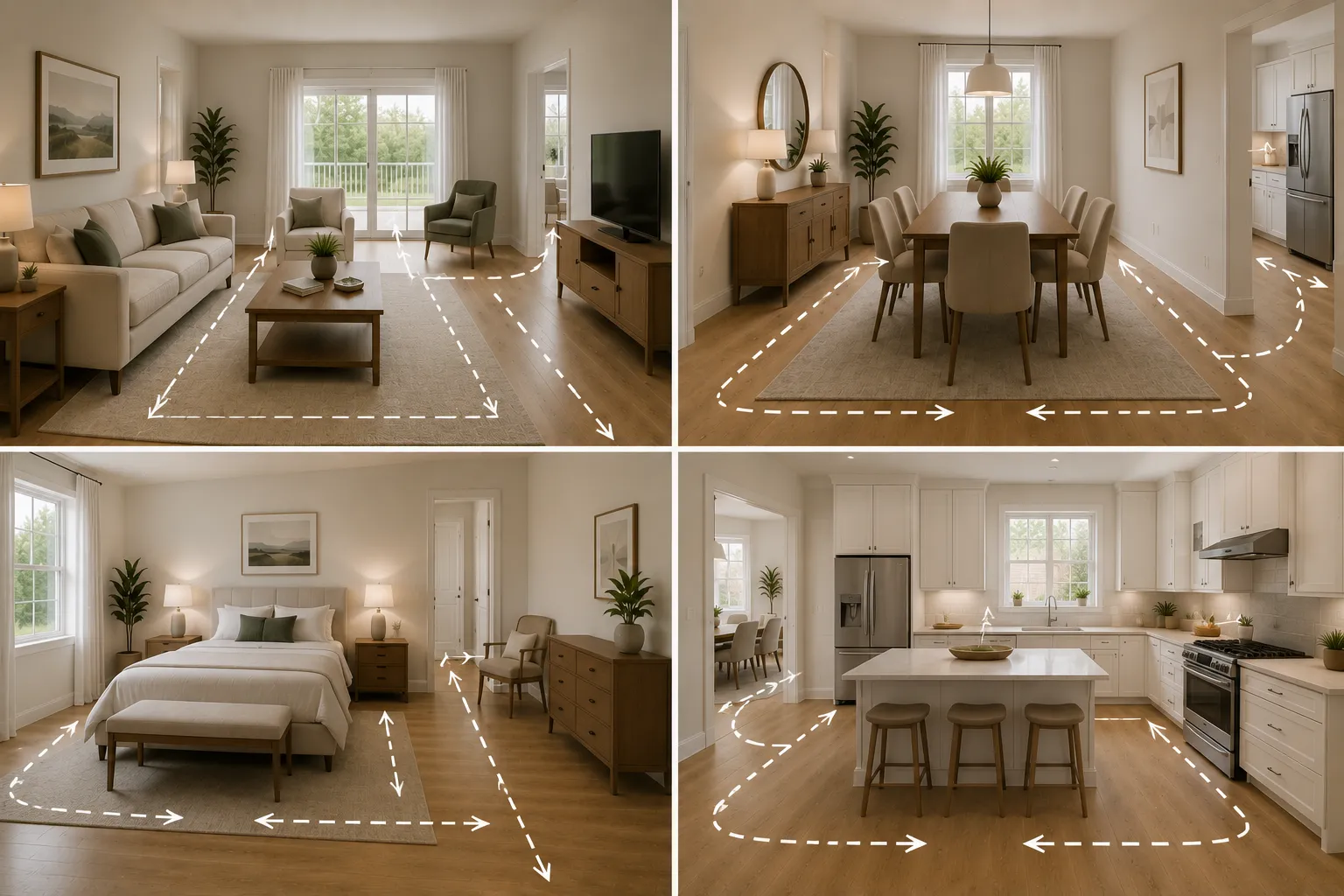
People need enough space to walk comfortably between furniture pieces. Interior designers often recommend around 36 inches of walkway space in busy areas of the room.For example, if a sofa sits too close to the coffee table, people may bump their legs every time they walk by.
Good spacing makes a room feel calm and open.The same rule works for dining rooms too. Chairs need enough space to slide backward without hitting walls or cabinets.
Furniture layout is not only about fitting items inside a room. It is about making daily life easier.
Measure Furniture Before Buying
After measuring the room, the next step is measuring the furniture.Do not guess the size by looking at photos online. Pictures can be misleading. Always check the product dimensions.
Look carefully at:
- width,
- depth,
- height,
- and seat size.
A sofa may look small in pictures but still be very deep in real life.
Sectional sofas need even more attention because they take up large corners. Beds, dressers, and dining tables also need extra room around them.
A king-size bed may fit inside a bedroom, but once you add side tables and walking space, the room may feel cramped.
Think about the entire setup, not just one furniture piece.
Use Tape on the Floor
One simple trick makes measuring much easier.Use painter’s tape to mark the furniture shape on the floor.
For example, if a sofa is 84 inches wide, place tape on the floor in the same size. Suddenly, you can “see” how much room the sofa will take.This helps people understand scale and proportion better than numbers alone.
Many interior designers use this method because it gives a realistic view of the furniture footprint.It also helps avoid buying oversized furniture.
Plan Around Windows and Doors
Furniture should not block important parts of the room.Before choosing furniture placement, check:
- windows,
- doors,
- vents,
- outlets,
- and light switches.
A tall bookshelf covering a window can make the room feel dark. A sofa blocking air vents can affect airflow. A bed placed too close to a door may make the room feel uncomfortable.Good room layout keeps everything working properly while still looking nice.
Make Small Rooms Feel Bigger
Small rooms need smarter furniture planning.
Large furniture inside tiny spaces can make a room feel heavy and crowded. Sometimes people think smaller furniture means less comfort, but that is not true.
The secret is balance.
A smaller sofa with clean lines may look much better than a huge sectional squeezed against every wall. Furniture with visible legs can also make rooms feel more open because you can see more floor space underneath.
Light colors, simple furniture arrangement, and better spacing help small rooms breathe.
Even a tiny room can feel cozy when the measurements are right.
Think About Daily Life
Professional room planning is not only about numbers. It is also about how people live.
Ask simple questions:
- Where will kids play?
- Can people walk easily through the room?
- Will the coffee table block movement?
- Can the drawers open fully?
- Is there enough space for guests?
A room should work for real life, not just for photos.
One couple bought a huge dining table because it looked beautiful online. But after placing it in their dining room, nobody could walk comfortably around it. Every dinner felt cramped.Later they switched to a smaller table, and the room suddenly felt twice as big.Sometimes less furniture creates more comfort.
Common Measuring Mistakes
Many furniture mistakes happen because people rush. One common mistake is measuring only once. Professionals measure twice to avoid errors.Another mistake is ignoring furniture depth. People often focus on width but forget how far furniture sticks out into the room.
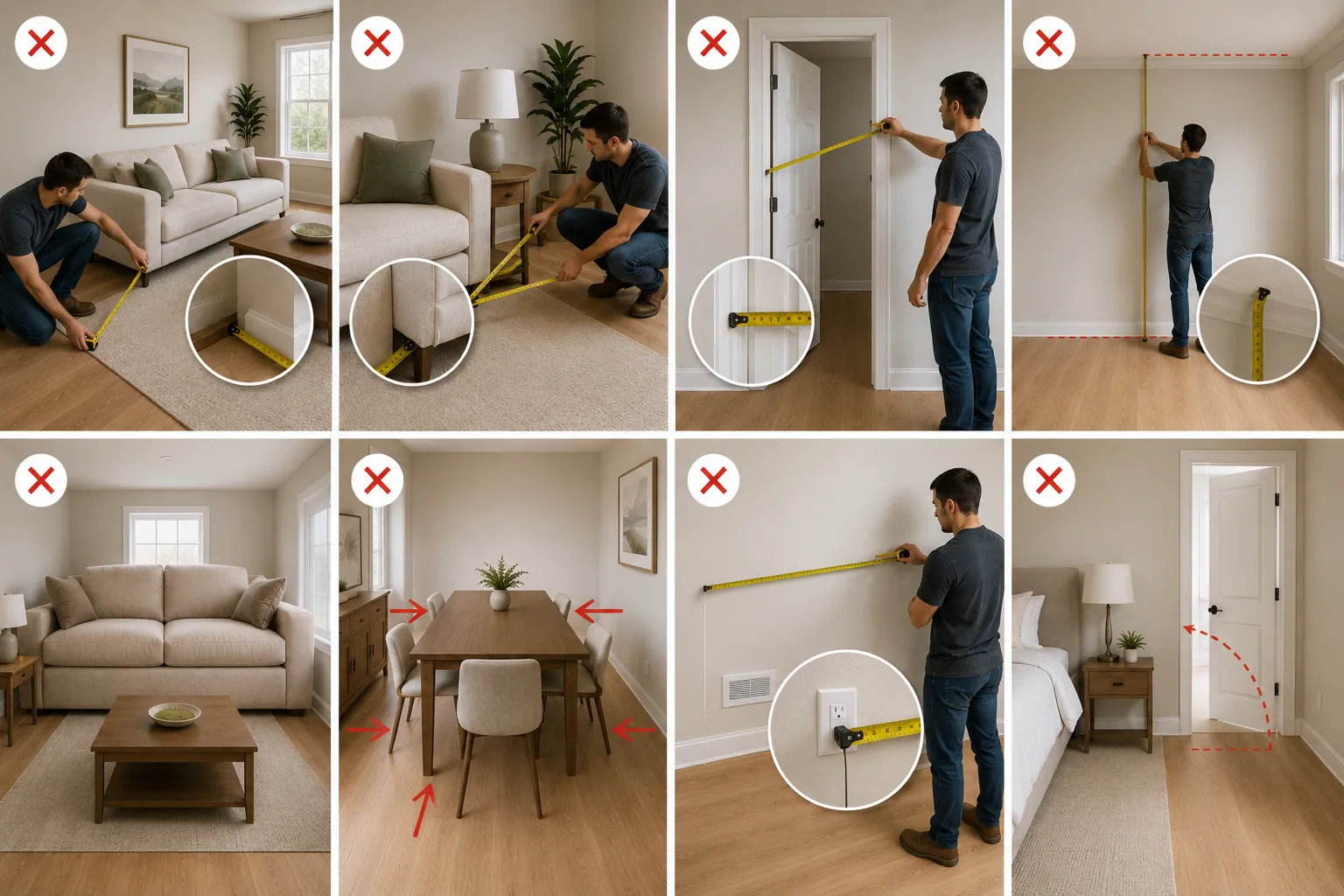
Some people also forget about rugs. A rug changes the visual size of a room and affects furniture arrangement.Others ignore wall features like radiators, fireplaces, or built-in shelves.The biggest mistake of all is shopping emotionally instead of practically. A giant sofa may look beautiful in a showroom, but real homes need balance and movement.
Create a Simple Floor Plan
You do not need fancy software to plan a room.
Even a rough sketch helps.
Draw the room shape on paper and add:
- windows,
- doors,
- outlets,
- and furniture dimensions.
This simple floor plan helps you test furniture layouts before buying anything.You can move pieces around on paper first instead of struggling later with heavy furniture. Professional interior designers do this all the time because planning saves time and money.
Room-by-Room Measuring Tips
Living rooms usually need careful sofa spacing and coffee table placement. Leave enough room for people to walk comfortably between furniture pieces.Bedrooms need space around the bed. Many people forget to leave room for opening drawers or closet doors.
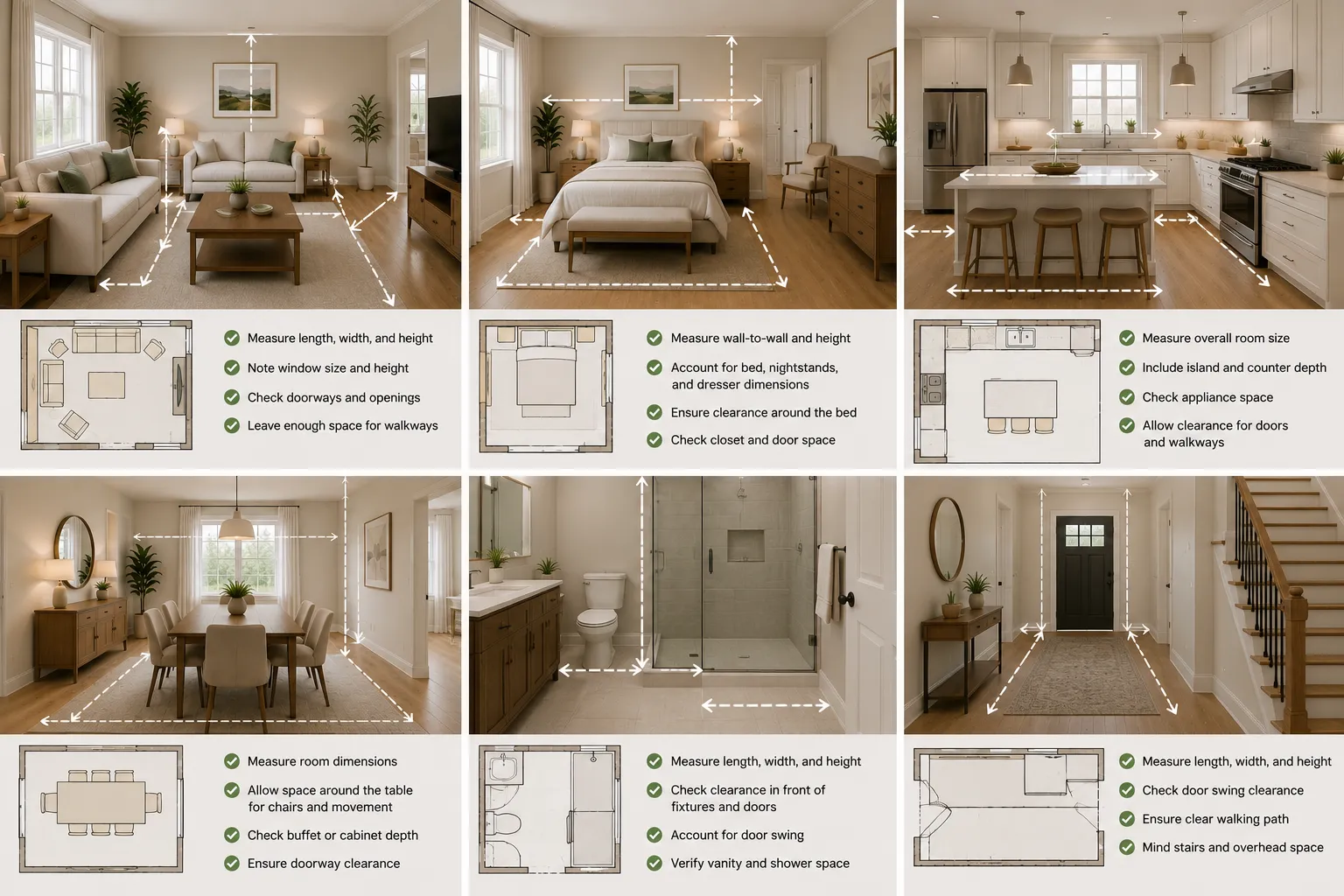
Dining rooms should allow chairs to move backward easily. A dining table that barely fits can make meals uncomfortable.Home offices need enough room for desk chairs to slide and turn properly.Every room has different needs, but the idea stays the same. Measure first, buy second.
Final Thoughts
Learning how to measure room for furniture like a pro is really about slowing down and planning carefully.
A few simple measurements can prevent expensive mistakes and help create a room that feels comfortable every day.The best rooms are not always the biggest or the most expensive. They are the rooms where people can move easily, relax comfortably, and enjoy the space without feeling crowded.
Next time you shop for furniture, do not trust your eyes alone.Take out the measuring tape first.Your future self will thank you.