A Little Story Before We Start
One Saturday morning, Ben wanted to clean his room. His books were all over the floor. His toy cars were hiding under the bed, and his little dinosaur collection sat in a messy pile on the desk.
“Dad,” Ben said, “I wish I had cool shelves like the ones in my friend Jake’s room.”
Dad smiled and said, “Then let’s build some.”
Ben thought putting up shelves would be super hard. He imagined giant tools, loud drills, and walls breaking apart. But Dad showed him that hanging shelves is really just about taking your time, using the right tools, and knowing what kind of wall you have.
By the end of the day, Ben had shelves holding books, toys, and even a tiny plant he named Spike.
And now you can learn how to do it too.
What Is a Shelf?
A shelf is a flat board attached to a wall. People use shelves to hold books, toys, pictures, plants, clothes, or kitchen items. Shelves help keep rooms clean and make empty walls look nice.
Some shelves are small and simple. Others are long and strong enough to hold heavy things.
But before hanging a shelf, you need to know something important.
Not all walls are the same.
Why Wall Type Matters
Imagine trying to stick a spoon into soft ice cream. Easy, right?
Now imagine pushing the same spoon into a big rock. Much harder.
Walls are like that too. Some walls are soft inside. Some are very hard. Some can crack if you are rough with them.
That is why the way you hang shelves changes depending on the wall type.
If you use the wrong screws or the wrong tools, the shelf might become loose or even fall down.
Nobody wants their favorite books crashing onto the floor in the middle of the night.
The Tools You Need
Before Ben and his dad started working, they placed all their tools on the floor.You do not need a giant toolbox with a hundred tools. Most shelf jobs only need a few simple things.A measuring tape helps you know where the shelf should go. A pencil helps mark the wall. A level makes sure the shelf is straight and not crooked like a sleepy banana.
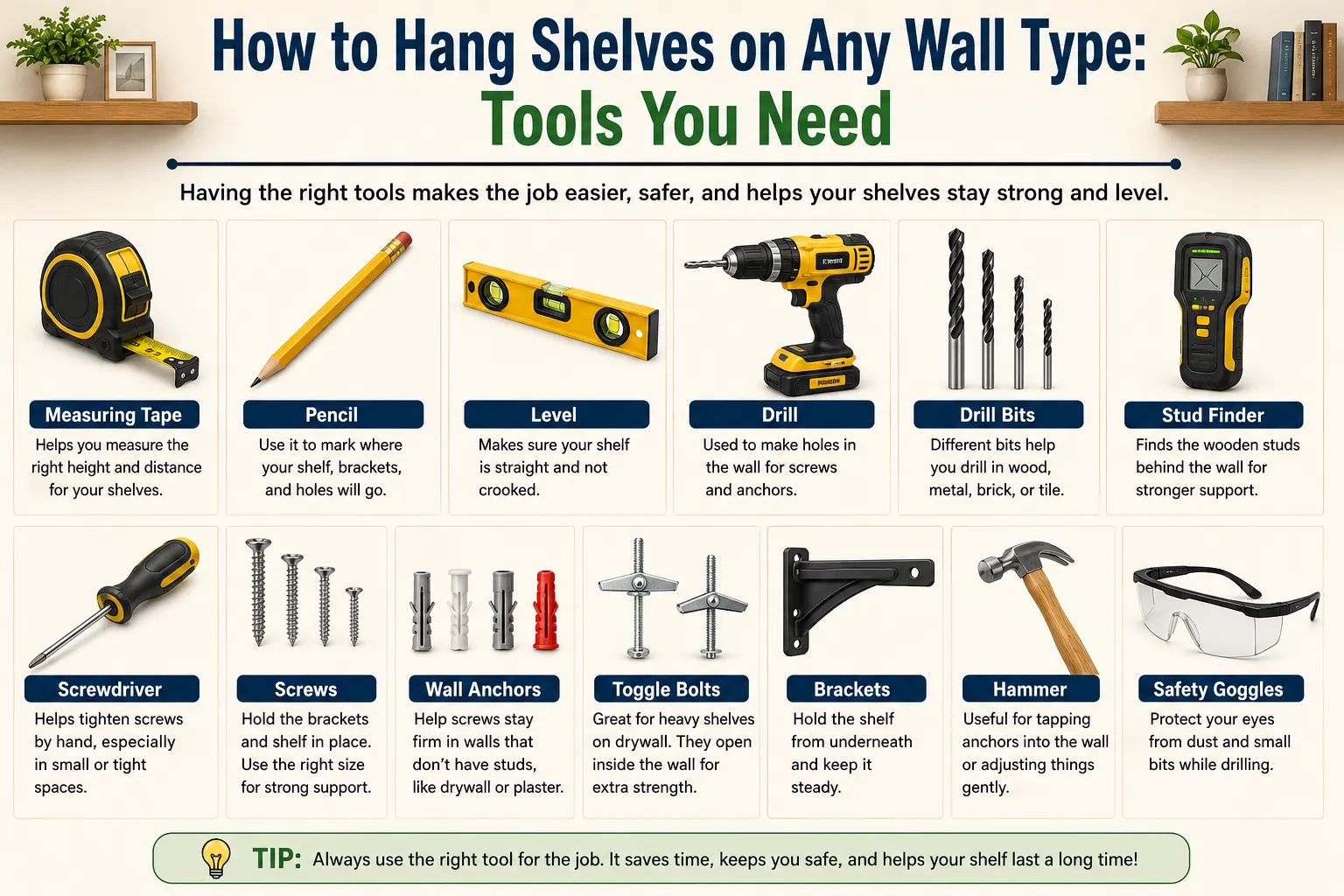 You will also need a drill, screws, and shelf brackets if your shelf uses them.Some shelves are called floating shelves. Those have hidden supports inside and look like they are magically floating on the wall.Ben thought those looked super cool.
Picking the Best Spot for Your Shelf
Before drilling holes, stand back and look at the wall carefully.Ask yourself what the shelf will hold.If it is for books, make sure it is easy to reach. If it is for decorations, maybe higher up looks better.Ben wanted one shelf above his desk for books and another near his bed for his dinosaur toys.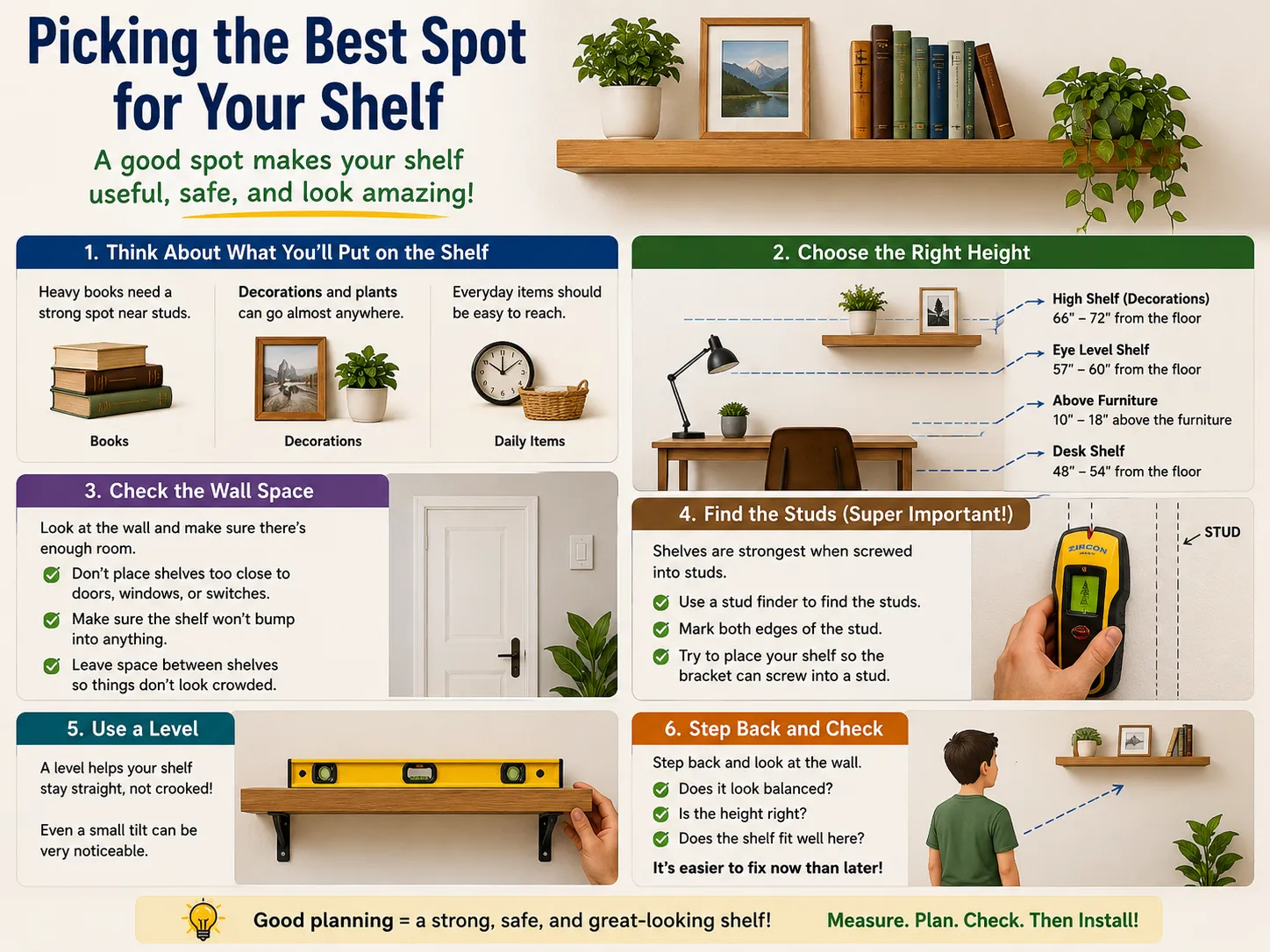
Dad told him something important.“Always measure first. Drilling holes in the wrong place is annoying.”That turned out to be very true.They measured carefully and made tiny pencil marks on the wall.
How to Know What Kind of Wall You Have
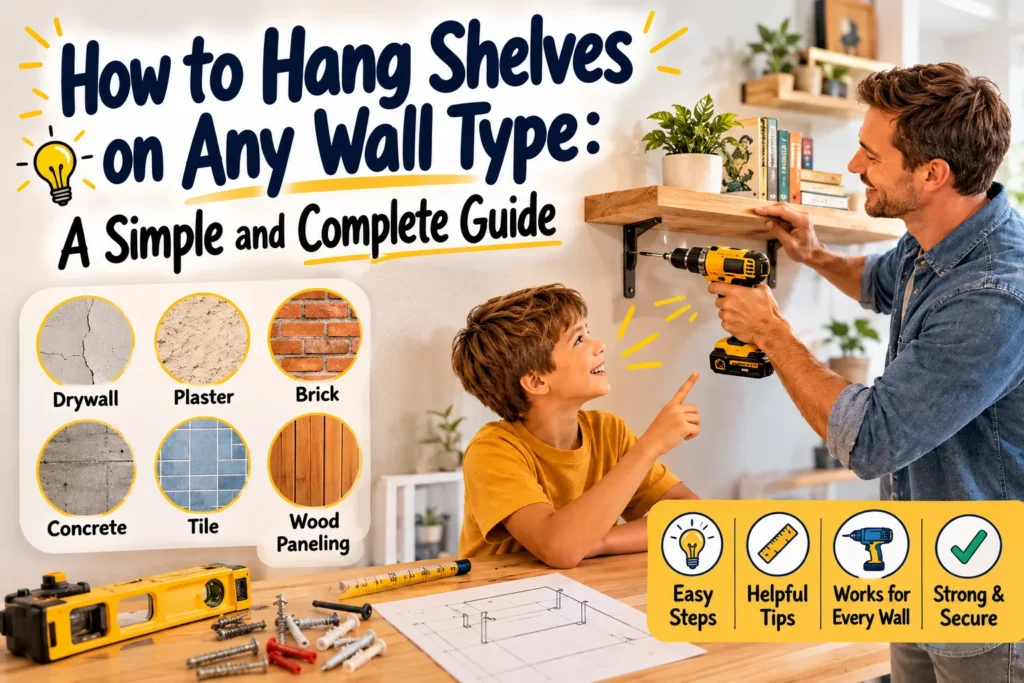
This part sounds tricky, but it is easier than you think.Some homes have drywall. This is the most common wall type. It sounds a little hollow when you tap it.Some older homes have plaster walls. These are harder and thicker.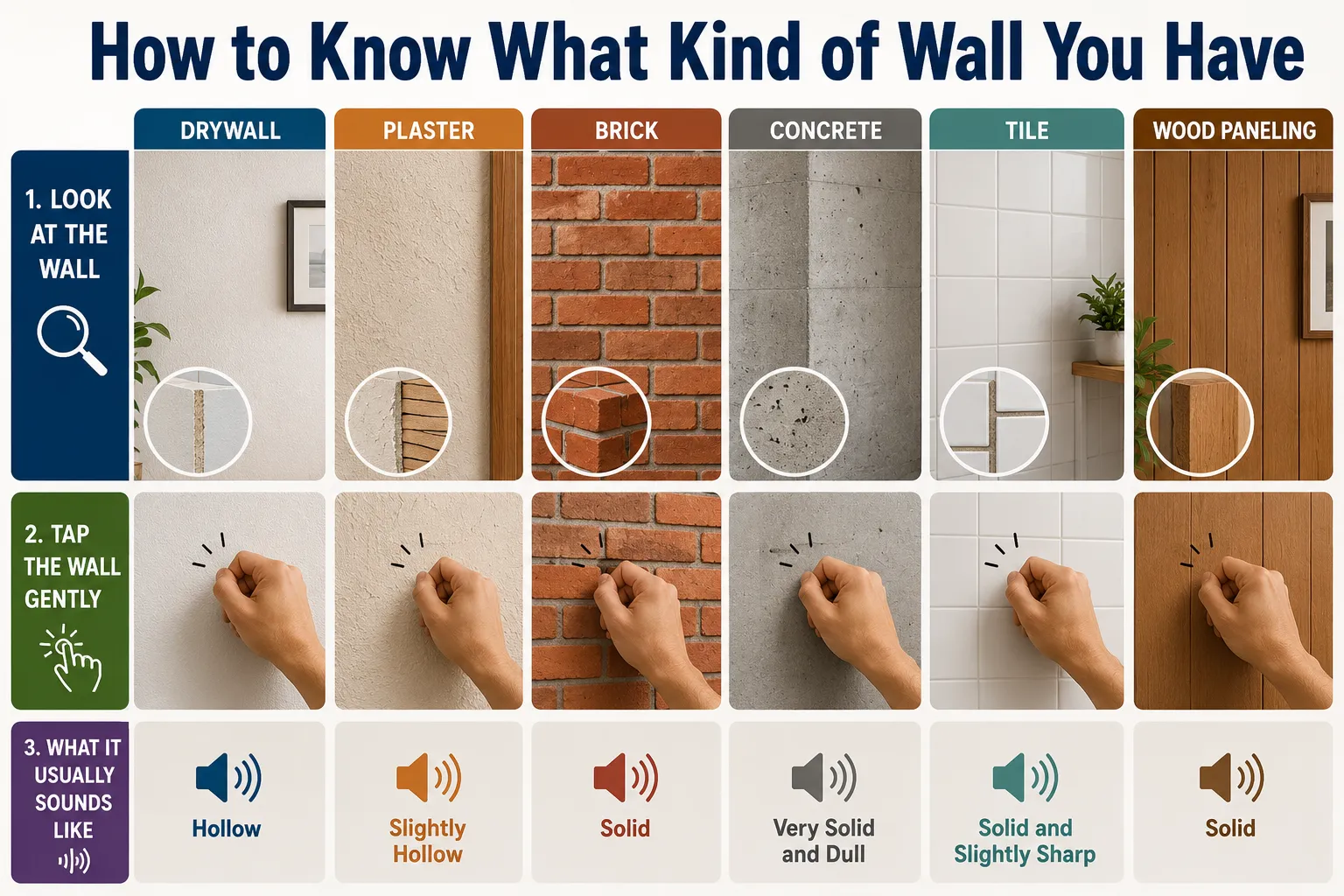
Brick walls look like bricks. Concrete walls feel super strong and solid. Tile walls are smooth and shiny, often found in bathrooms or kitchens.Ben tapped every wall in the house like a detective solving a mystery.His mom laughed and asked why the house suddenly sounded like a drum concert.
Hanging Shelves on Drywall
Drywall is the most common wall type in many homes.It is easy to drill into, but there is one problem.Drywall alone is not very strong.Inside the wall are wooden beams called studs. These studs are very strong and are the best place to attach shelves.
Dad used a stud finder to locate them. The little tool beeped when it found wood behind the wall.Ben thought the beeping tool felt like a treasure hunter gadget.Once they found the studs, Dad drilled small holes and screwed the brackets into the wood.The shelf felt strong and solid.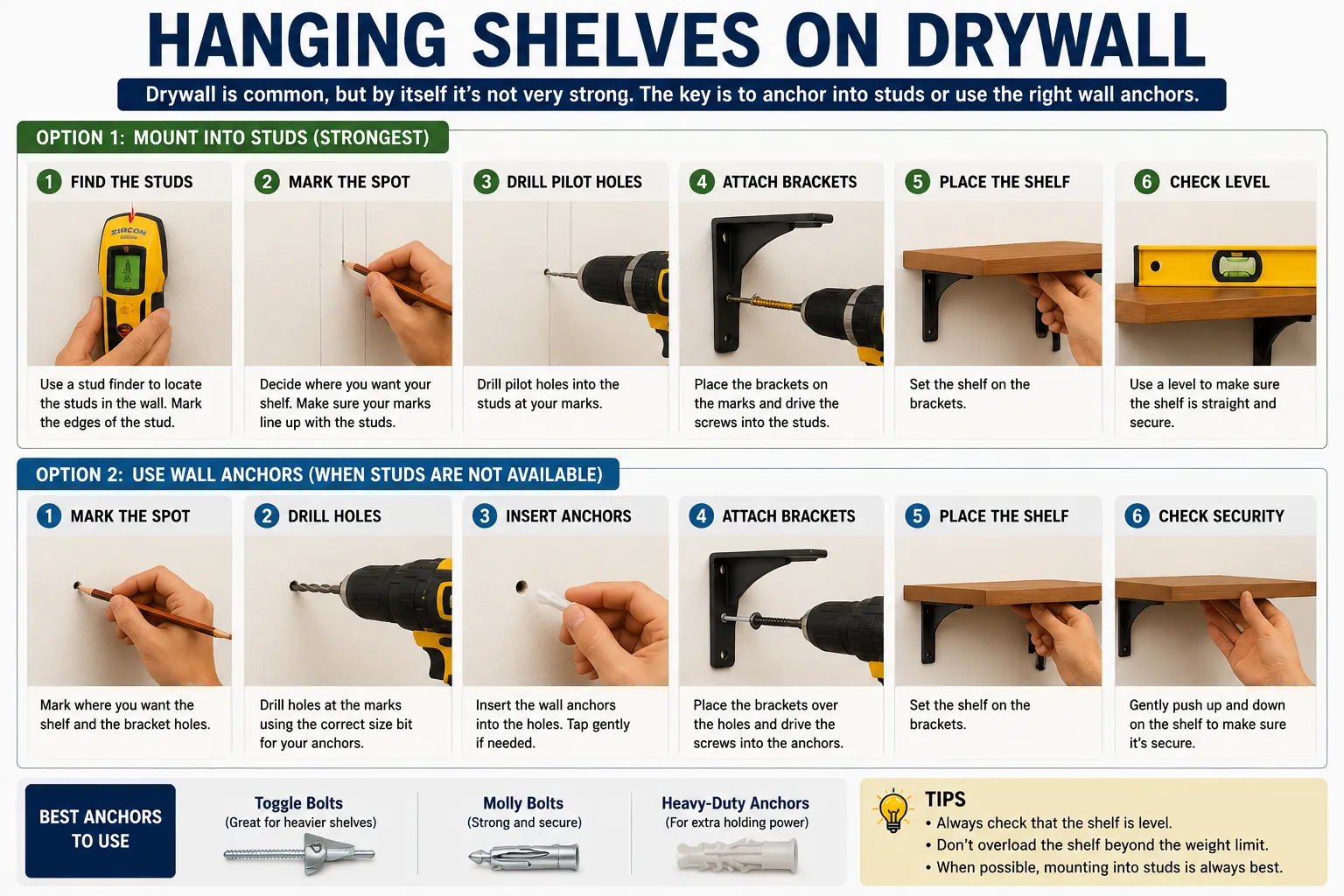
But what if there is no stud where you want the shelf?
That is when wall anchors help.Wall anchors are little pieces that go inside the wall and help hold the screws tightly.Without anchors, screws can slide out of drywall easily.Ben learned that tiny parts can do very important jobs.
Hanging Shelves on Plaster Walls
Plaster walls are common in older homes.These walls are harder than drywall and can crack if you rush.Dad showed Ben a simple trick.He placed painter’s tape on the wall before drilling. This helped stop cracks from spreading.Then he drilled slowly and carefully.
“Slow and steady,” Dad said.Ben repeated it like it was a superhero motto.Plaster walls can hold shelves well, but patience matters a lot.If you rush, the wall may chip or crumble.
Hanging Shelves on Brick Walls
Brick walls look beautiful, but they are much tougher to drill into.When Ben watched Dad drill into brick for the first time, tiny dust clouds puffed out everywhere.“You definitely don’t want this dust in your eyes,” Dad said while putting on safety glasses.For brick walls, you need special drill bits made for masonry.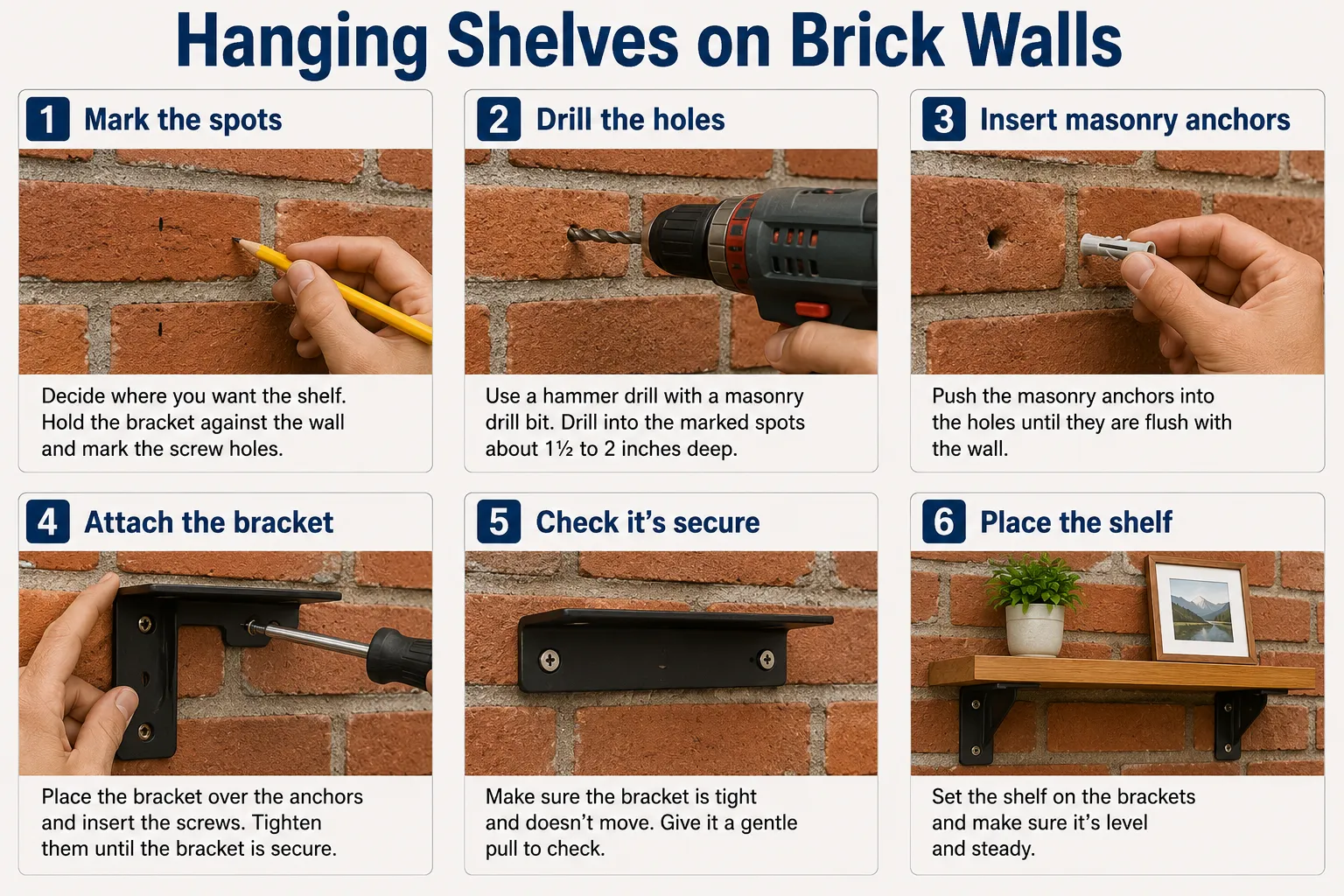
The drill works harder on brick than on drywall. It makes louder noises too.Once the holes are ready, masonry anchors go inside. Then the screws hold the shelf tightly.Brick walls are super strong, which makes them great for heavy shelves.Ben imagined the brick wall saying, “Go ahead. Put all the books you want on me.”
Hanging Shelves on Concrete Walls
Concrete walls are even stronger than brick.They are common in garages, basements, and some apartments.Concrete does not crack easily, but drilling into it takes time.Dad explained that concrete is like a giant stone block.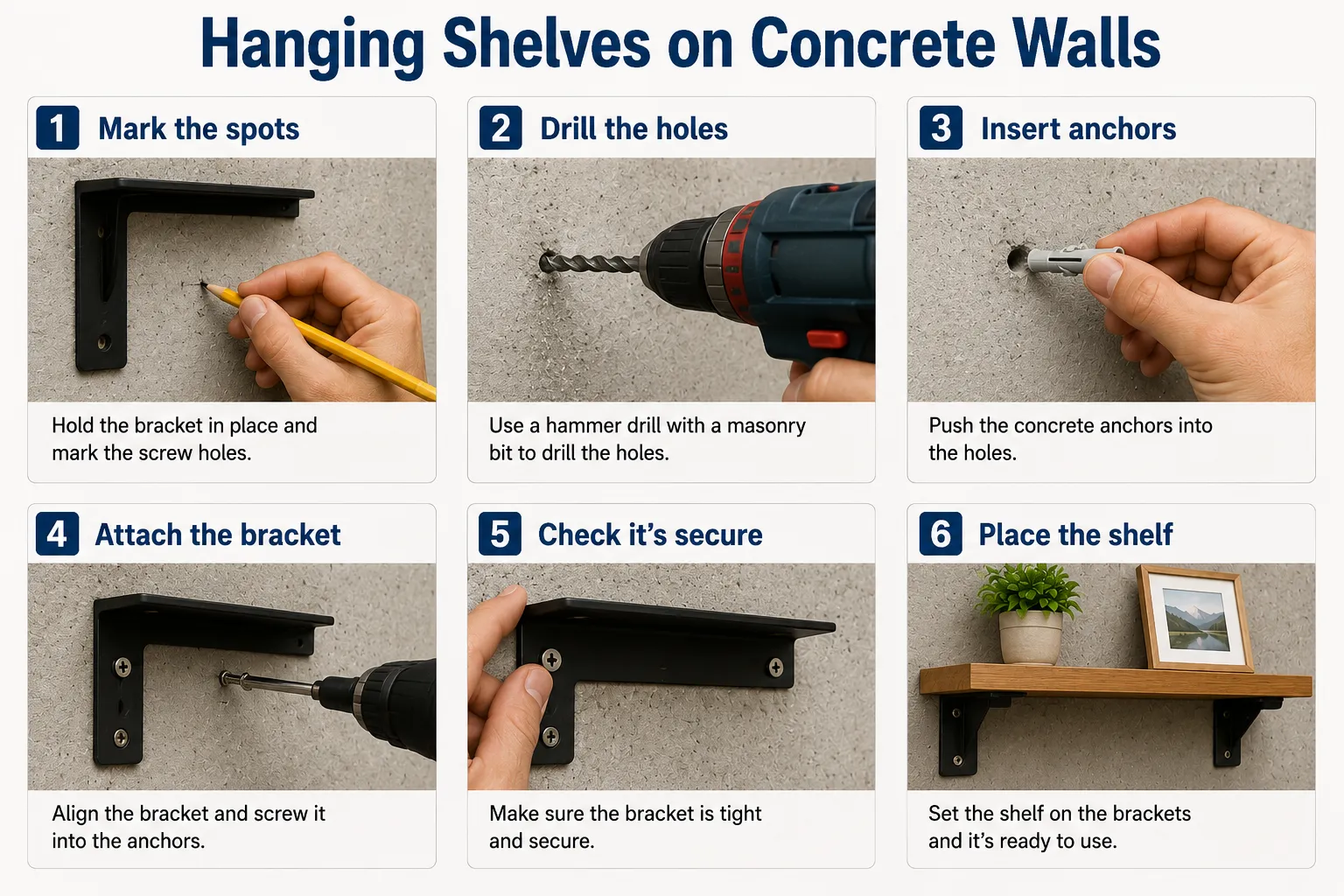
They used a hammer drill, which is stronger than a regular drill.Ben said it sounded like a tiny robot woodpecker.After drilling, they cleaned the dust from the holes before putting in anchors and screws.That part mattered more than Ben expected.
Dust left inside the hole can make screws weaker.Little details make a big difference when hanging shelves.
Hanging Shelves on Tile Walls
Tile walls can be tricky because tiles can crack.These walls are common in bathrooms and kitchens.Dad placed tape on the tile first. Then he drilled slowly.Very slowly.Ben asked why.“Because tile can break if we push too hard,” Dad explained.The drill bit slowly cut through the tile without cracking it.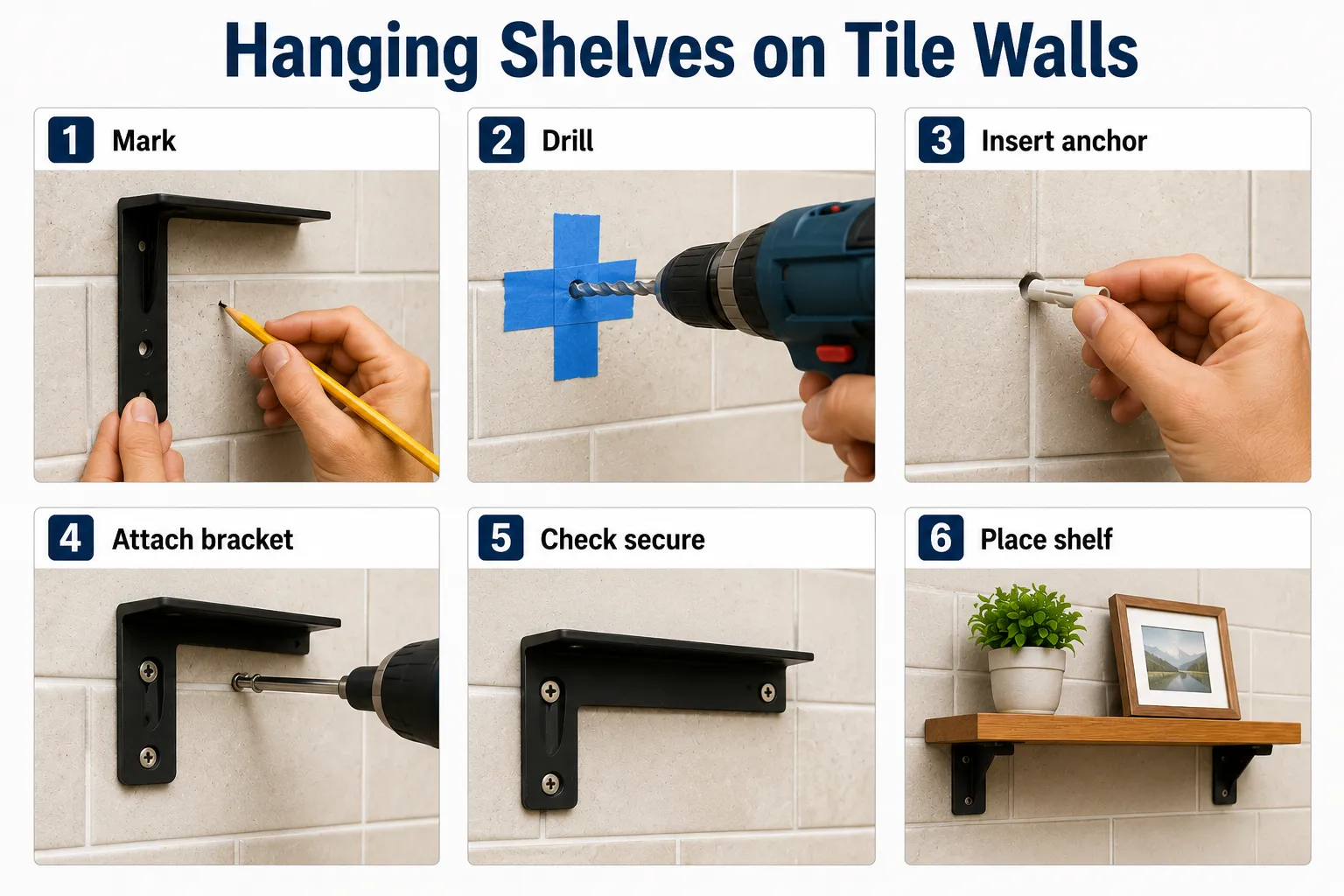
Once the hole was ready, the shelf brackets were attached carefully.Ben thought the bathroom shelf looked fancy, like something from a hotel.
Floating Shelves
Floating shelves are special because you cannot see the brackets.They look clean and modern.Ben loved them immediately.But floating shelves need careful measuring.If the hidden bracket is not level, the whole shelf will look crooked.Dad measured twice before drilling.Then he measured again.
Ben asked, “Why so much measuring?”
Dad smiled.“Because fixing mistakes takes longer.”Once the hidden bracket was attached, the shelf slid into place like a puzzle piece.It looked amazing.Ben stepped back and whispered, “Whoa.”
How Much Weight Can Shelves Hold?
This depends on the wall and the hardware.A small shelf holding a picture frame is very different from a giant shelf holding heavy books.Dad explained it like this.
“A backpack full of feathers feels light. A backpack full of rocks feels heavy.”
Shelves work the same way.Shelves attached to studs can hold much more weight than shelves attached only to drywall.Brick and concrete walls can usually hold the heaviest shelves.But even strong shelves should not be overloaded.Ben wanted to put every dinosaur toy on one shelf.Dad suggested spreading them out instead.Good idea.
Mistakes People Make
Ben learned that many shelf problems happen because people rush.Some people skip measuring.Some use the wrong screws.Some forget to check if the shelf is level.Crooked shelves are very easy to notice.One tiny mistake can make the whole shelf look strange.Another mistake is using weak anchors for heavy shelves.A giant pile of books needs strong support.Tiny plastic anchors are not always enough.
Dad always checked the shelf by gently pulling on it before putting anything on top.That simple test can help you know if everything feels secure.
Making Shelves Look Nice
Shelves are useful, but they can also make a room feel warm and cozy.Ben placed his favorite dinosaur on the top shelf.Then he added books, a small lamp, and a framed drawing.Suddenly the room felt different.
More like his own special place.That is one of the best things about shelves.They are not just boards on walls.They help tell your story.
Final Thoughts
By the end of the weekend, Ben’s room looked completely different.The floor was clean. His books had a home. His toys were easy to find.And every time someone visited his room, Ben proudly pointed at the shelves and said, “We built those.”Hanging shelves may seem difficult at first, especially when you hear words like anchors, studs, masonry, and drill bits.But once you understand your wall type and take your time, the job becomes much easier.
And always make sure the shelf feels strong before placing heavy things on it.A simple shelf can change a room more than people expect.Sometimes all it takes is a board, a few screws, and a quiet Saturday afternoon.