Have you ever looked at a wall in your house and wished you could paint something else the exact same color? Maybe you want to touch up a scratched spot, or paint a piece of furniture to match your bedroom walls. The problem is, finding the right color can feel like an impossible guessing game. You might bring home five different paint samples, and none of them look quite right!
The good news is that you don’t have to guess anymore. There are several smart ways to match paint colors perfectly, and most of them are pretty easy. Whether you’re helping your parents with a home project or working on your own art, these tricks will help you get the exact color you need.
Why Matching Paint Colors Is So Tricky
Before we learn the solutions, let’s understand why this is hard in the first place. Paint colors can look totally different depending on the light in the room. A color that looks bright blue in the morning might look more purple at night when you turn on the lights. Paint also changes slightly as it dries, which makes it even harder to match.
Plus, paint companies make thousands of different colors. Even if two colors look almost identical, they might have slightly different amounts of red, blue, or yellow in them. That tiny difference becomes really obvious when you paint them next to each other on a wall.
The other problem is that walls get dirty and fade over time. The paint might have been a perfect “Sky Blue” when it was first painted five years ago, but now it might look a little different because of dust, sunlight, and age.
The Paint Chip Method
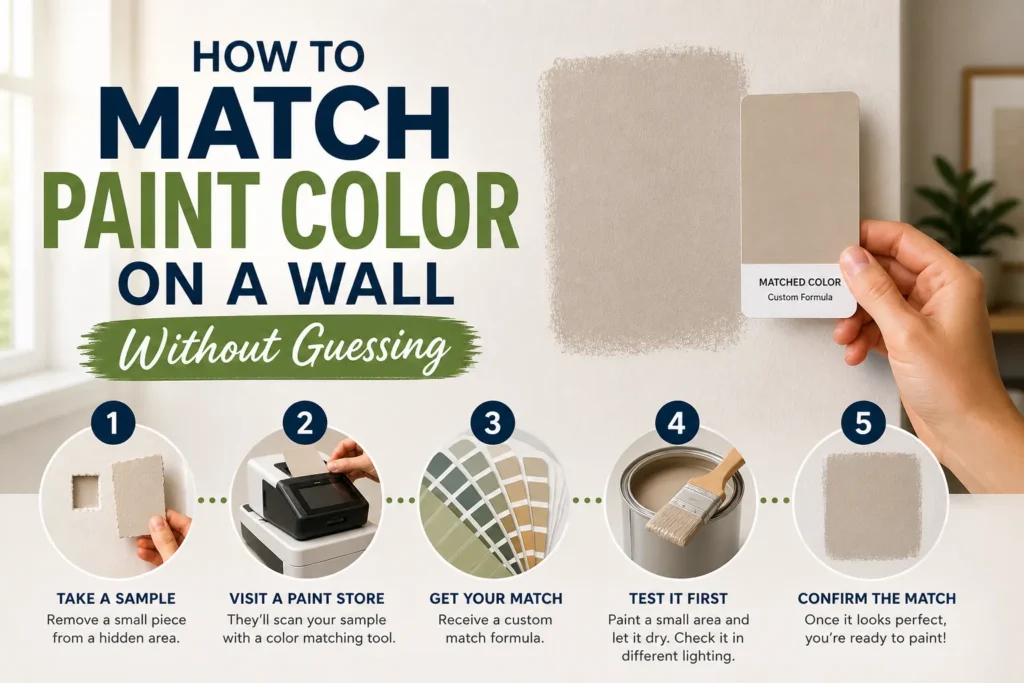
The easiest way to match paint is to bring a piece of the actual wall to the paint store. I know this sounds crazy, but it really works! Obviously, you can’t cut out a big chunk of your bedroom wall. But there are places where you can get a small sample without anyone noticing.
Look for spots where you can scrape off a tiny piece of paint. Good places to check are inside closets, behind furniture that never moves, or in the corners where the wall meets the ceiling. You only need a piece about the size of a quarter, or even smaller.
Use a paint scraper or even a butter knife to gently lift off a small chip of paint. Try to get a piece that shows all the layers of paint if possible. Sometimes walls have been painted multiple times, and the store needs to see the top color clearly.
Take this paint chip to any paint store or hardware store that mixes paint. The people who work there have special machines that can scan your paint chip and figure out exactly what colors are in it. They can then mix you a perfect match. It’s like magic, but it’s actually science!
Using Your Phone to Match Colors
Did you know your smartphone can help you match paint colors? Several paint companies have created free apps that use your phone’s camera to identify colors. It’s super convenient because you probably carry your phone with you everywhere anyway.
Apps like ColorSnap by Sherwin-Williams, Color Muse by Colormatch, and Dulux Visualizer let you take a picture of your wall. The app analyzes the color and tells you which paint color from that company matches it best. Some apps even show you what the color would look like in different rooms.
Here’s how to use these apps effectively. First, take your photo in good, natural light. Open your curtains and take the picture during the daytime, but not in direct sunlight. Bright sunshine or yellow lamp light can make colors look different than they really are.
Take several photos of the same wall at different times of day. You might be surprised to see that the wall looks slightly different in each photo. This actually helps you understand what the true color is.
The app will suggest several paint colors that are close matches. Write down the names and numbers of these colors. Then you can go to the paint store and ask to see actual samples of those colors. This saves you from looking through thousands of color options.
One important thing to remember is that phone cameras aren’t perfect. The color on your screen might not be exactly the same as the real wall color. That’s why you should always get real paint samples to test before buying gallons of paint.
Getting Help from Paint Store Experts
Paint stores employ people who match colors all day long. They’re really good at it! Don’t be shy about asking for their help. You can bring them paint chips, photos, or even a small item from your room that you want to match.
Many stores have special tools called spectrophotometers. This fancy machine shines light on your paint sample and measures exactly what colors are in it. It can detect even tiny differences that human eyes can’t see. The machine then creates a formula for mixing paint that matches your sample perfectly.
Some stores also offer color matching services where they’ll come to your house to look at the wall in person. This costs money, but it’s worth it for big projects where you need to be absolutely certain the color is right.
When you visit the paint store, bring your paint chip or photo, and also describe where the paint will be used. Tell them if the room gets lots of sunlight, if it’s a bathroom that gets steamy, or if it’s a kid’s room that might need extra-tough paint. This helps them recommend the right type of paint, not just the right color.
Testing Your Color Match Before Painting
Even after you’ve done everything right, you should still test the paint before you commit to painting a whole wall. Paint stores sell small sample containers that are perfect for testing. These little jars don’t cost much and they can save you from making an expensive mistake.
Paint a square of your sample color directly on the wall you want to match. Make this square at least one foot wide so you can really see the color. Paint it right next to the existing wall color, not in a corner where it’s hard to see.
Let the paint dry completely before judging if it matches. Wet paint always looks darker than dry paint. You might need to wait a few hours or even overnight for it to fully dry.
Look at your test square at different times of day. Check it in the morning with natural light, in the afternoon, and at night with your room lights on. If the color looks good in all these different lights, you’ve found your match!
If the color isn’t quite right, don’t give up. Take note of how it’s different. Is it too dark? Too light? Too blue? Too yellow? Take this information back to the paint store. They can adjust the color formula to get closer to what you need. Sometimes it takes two or three tries to get it perfect, and that’s okay.
Special Tips for Old Paint
If your wall was painted a long time ago, matching it can be extra challenging. Old paint fades, especially if the wall gets lots of sunlight. The color might have also yellowed over time, particularly if it’s white or cream colored.
In these cases, you might need to make a choice. Do you want to match what the wall looks like now, or what it looked like when it was first painted? If you’re just touching up a small area, match the current faded color. If you’re repainting a whole wall or room, you might want to go back to the original, brighter color.
Sometimes old paint contains ingredients that aren’t used anymore. If your house was painted before 1978, the paint might even contain lead, which is dangerous. In this case, don’t scrape paint chips yourself. Ask an adult to help, and consider getting the paint tested for lead first.
When to Repaint Instead of Match
Here’s something important to consider: sometimes it’s better to just repaint the entire wall instead of trying to match a small section. Even if you match the color perfectly, the new paint might look different because it’s fresh and clean while the old paint is dirty and worn.
This is especially true for white and light-colored paints. Even a perfect color match can look like a bright, clean patch on a dingy old wall. If you’re touching up more than a small spot, think about repainting the whole wall from corner to corner.
Wrapping It Up
Matching paint colors doesn’t have to be a guessing game anymore. Whether you use a paint chip, a smartphone app, or help from paint store experts, you have tools that make the job much easier. The key is to take your time, test your colors, and look at them in different types of light.
Remember that even professionals sometimes need a few tries to get the color exactly right. Don’t get frustrated if your first attempt isn’t perfect. Each try teaches you more about how colors work and how paint behaves.
With these methods, you can confidently match any paint color in your home. Whether you’re fixing a scratch, updating furniture, or helping with a bigger painting project, you now have the knowledge to get the color exactly right. No more guessing required!