Starting your first garden can feel overwhelming. You look at your empty yard and imagine fresh tomatoes, crisp lettuce, and sweet carrots, but you have no idea where anything should go. If you are searching for a beginner basic vegetable garden layout, you are likely looking for clear direction, proper spacing, and a plan that actually works.
The good news is this: a simple and smart vegetable garden layout can save you time, money, and stress while giving you strong harvests. You do not need a huge yard or expensive tools. You only need a clear garden layout, the right plant spacing, and a design that fits your space and lifestyle.
This complete guide covers small and large layouts, raised beds, vertical gardening, spacing tips, and common mistakes. Whether you want a small vegetable garden layout, a beginner 20×20 vegetable garden layout, or a simple patio setup, you will find everything here.
Before You Choose a Vegetable Garden Layout
Before picking from different vegetable garden layouts, take a few minutes to understand your space. Most vegetables need at least six to eight hours of direct sunlight each day. Watch where sunlight stays longest and choose that area.
Check the soil drainage. Water should not sit in one place for too long because wet roots can rot. The garden should also be easy to reach. If it feels difficult to access, you may avoid caring for it regularly.
Think about how much time you can spend each week. A small vegetable garden layout for beginners works best if you have limited time. A larger design, such as a beginner 20×20 vegetable garden layout, works well if you enjoy regular watering, pruning, and harvesting.
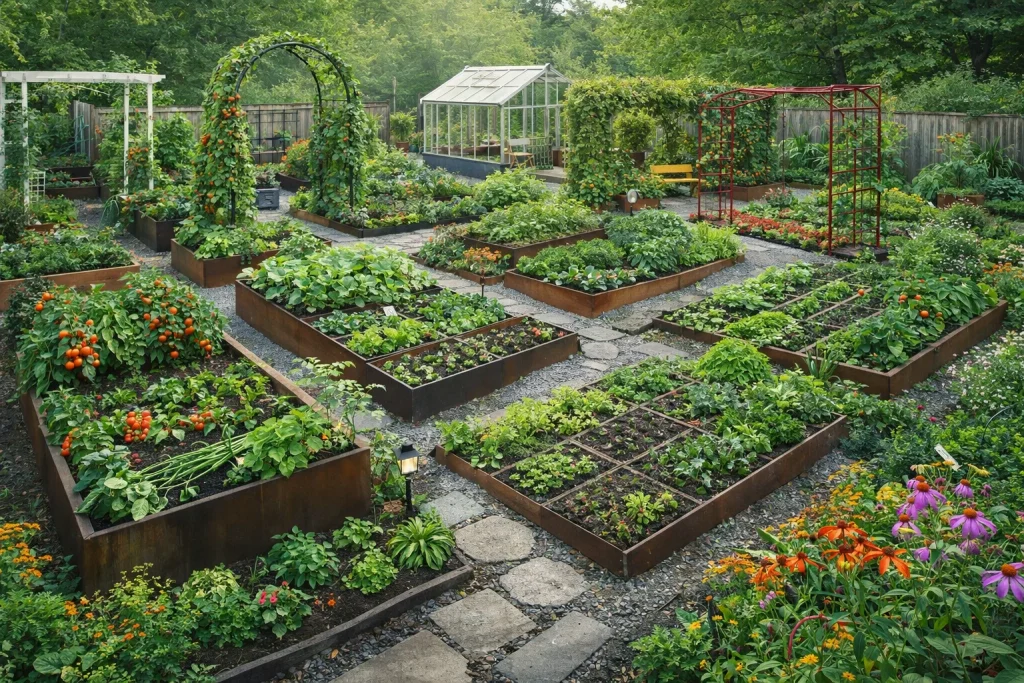
Starting small always increases your success.
Beginner Basic Vegetable Garden Layout Ideas
Below are 25 practical and easy layouts that cover different garden sizes, climates, and goals.
1. 4×8 Square Foot Garden Layout
This is one of the best basic vegetable garden layouts for beginners. A 4×8 raised bed is divided into small square sections. Tall plants like tomatoes or pole beans go at the back. Medium plants such as peppers grow in the middle. Leafy greens and carrots stay at the front.
This layout keeps spacing clear and prevents overcrowding.
2. 10×10 Beginner Garden Layout
A 10×10 space gives more planting room without feeling overwhelming. Arrange tall vegetables along the north side, medium crops in the center, and shorter crops at the front. This beginner garden layout makes watering and harvesting simple.
3. Small Vegetable Garden Layout with Pots
If you only have a patio or balcony, use containers. Large pots are perfect for tomatoes and peppers. Smaller pots work well for herbs and lettuce. Hanging baskets add extra growing space.
This small vegetable garden layout is flexible and easy to manage.
4. Simple Salad Garden Layout
This layout focuses on lettuce, spinach, arugula, radishes, and herbs. These fast-growing crops allow multiple harvests in one season. It is one of the easiest vegetable garden layout ideas for beginners.
5. Salsa Garden Layout
Plant tomatoes at the back, peppers in the middle, and onions at the front. Add cilantro in a corner. This themed veggie garden layout keeps related crops together for easy harvesting.
6. Stir-Fry Garden Layout
Use a trellis for peas or beans at the back. Place bok choy and peppers in the center and carrots at the front. This layered structure improves airflow and productivity.
7. Two Raised Bed Layout
Use one raised bed for fruiting crops like tomatoes and cucumbers. Use the second bed for root vegetables and greens. This basic garden layout separates plant types and reduces shading problems.
8. L-Shaped Garden Layout
An L-shaped vege garden layout works well in corners. Tall plants grow along the long side while smaller crops fill the shorter side.
9. 4×4 Starter Layout
A compact 4×4 bed divided into small squares teaches proper spacing. It is ideal for learning plant distances and basic crop management.
10. Simple Vertical Layout
Add a trellis at the back for climbing vegetables. Keep shorter crops at the front. This simple vegetable garden layout maximizes space in small yards.
Medium-Level Vegetable Garden Layout Plans for Better Yield
As you gain confidence, you can try more advanced vegetable garden layout plans and spacing methods.
11. Three-Bed Crop Rotation Layout
Divide crops into fruiting plants, root vegetables, and leafy greens. Rotate them yearly. This improves soil health and reduces pests.
12. Companion Planting Layout
Group vegetables that grow well together. Tomatoes and basil pair well. Carrots grow nicely near onions. This method improves plant health and maximizes space.
13. Herb Border Layout
Plant herbs around the edges of your garden. Keep vegetables in the center. This keeps herbs easy to access and improves pollination.
14. High-Yield Vertical Garden Layout
Use tall trellises along the back of the bed. Place medium crops in the center and short crops in front. This design increases harvest in limited space.
15. Beginner 20×20 Vegetable Garden Layout
A beginner 20×20 vegetable garden layout allows rows of corn, beans, squash, tomatoes, and greens. Keep walking paths between rows to avoid soil compaction. This is the most common garden layout for growing vegetables in larger yards.
16. U-Shaped Raised Bed Layout
Arrange three beds in a U shape. Keep tall crops at the back and shorter ones on the sides. This design allows easy access without stepping on soil.
17. Pollinator-Friendly Layout
Place vegetables in rows and add flowers along edges. Flowers attract bees and increase harvest production naturally.
18. Hybrid Square and Row Layout
Combine square foot planting for small crops and straight rows for large plants. This offers structure with flexibility.
19. Perimeter Garden Layout
Grow tall crops around the edges and keep the center for smaller vegetables. This improves sunlight distribution.
20. Succession Planting Layout
Plant fast crops like lettuce and radishes first. After harvest, replant with beans or herbs. This keeps your garden productive all season.
Vegetable Garden Layouts for Special Conditions
21. Shade Garden Layout
Grow lettuce, spinach, and herbs in low-light areas. Place sun-loving crops in the brightest spots available.
22. Hot Climate Layout
Plant heat-tolerant crops like peppers and okra in full sun. Add mulch to retain moisture.
23. Balcony Vegetable Garden Layout
Use containers and vertical supports. Keep heavy pots near walls for safety.
24. Cold Frame Layout
Use a cold frame to extend the growing season. Grow greens and seedlings early in spring.
25. Kids-Friendly Mini Garden Layout
Create a small bed with cherry tomatoes, bush beans, and carrots. Keep the layout simple and reachable.
Vegetable Garden Layout Plans and Spacing Guide
Correct spacing is critical in any vegetable garden layout.
Tomatoes need about 18–24 inches. Peppers require 12–18 inches. Lettuce grows well with 6–12 inches. Carrots need only 2–3 inches.
Proper spacing improves airflow, reduces disease, and increases harvest size.
Common Beginner Garden Layout Mistakes
Many new gardeners overcrowd plants, ignore sun direction, or forget walking paths. Tall plants should never block smaller ones. Beds should not be too wide because reaching the center becomes difficult.
A clear and simple beginner vegetable garden layout prevents these problems
How to Build Your Garden Layout Step by Step
Start by measuring your space and drawing a simple sketch. Mark sunlight direction. Place tall crops at the back or north side. Leave walking paths between rows. Follow spacing guidelines carefully.
Add mulch to protect soil and reduce weeds. Install trellises early for climbing plants. Plant only a few vegetable types during your first season to keep care manageable.
Final Thoughts on Beginner Vegetable Garden Layout
A well-planned vegetable garden layout turns any space into a productive and organized growing area. Whether you choose a small vegetable garden layout, a simple raised bed design, or a beginner 20×20 vegetable garden layout, the key is proper spacing, sunlight planning, and easy access.
Keep your layout simple. Leave room to walk. Place plants based on height. Start small and expand later.
With the right plan, your basic vegetable garden layout will provide healthy vegetables, better yields, and a stress-free gardening experience all season long.