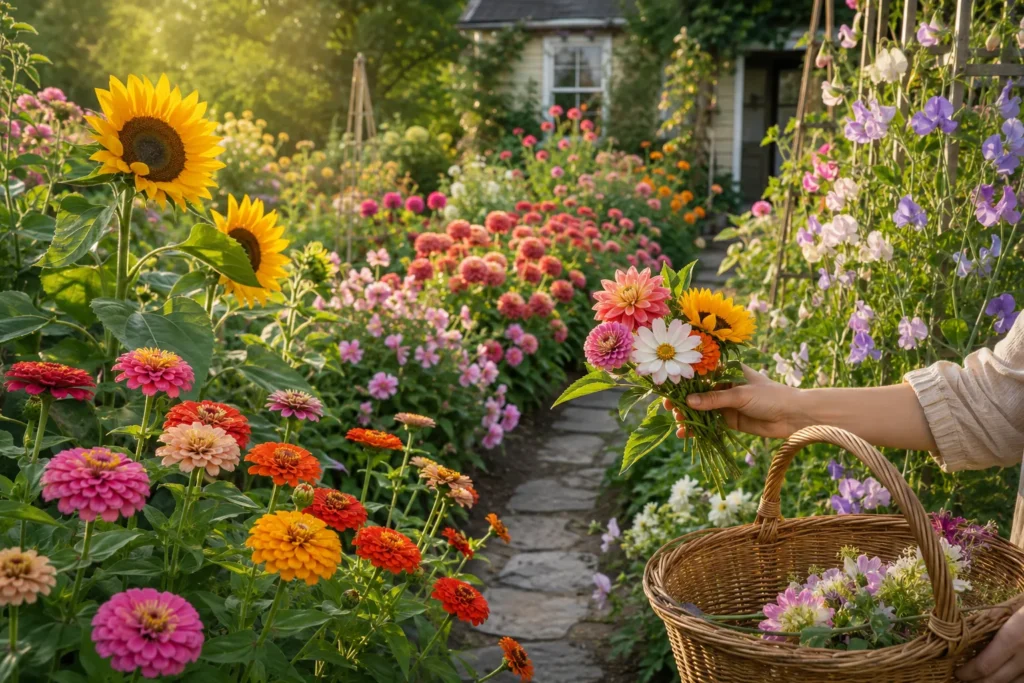
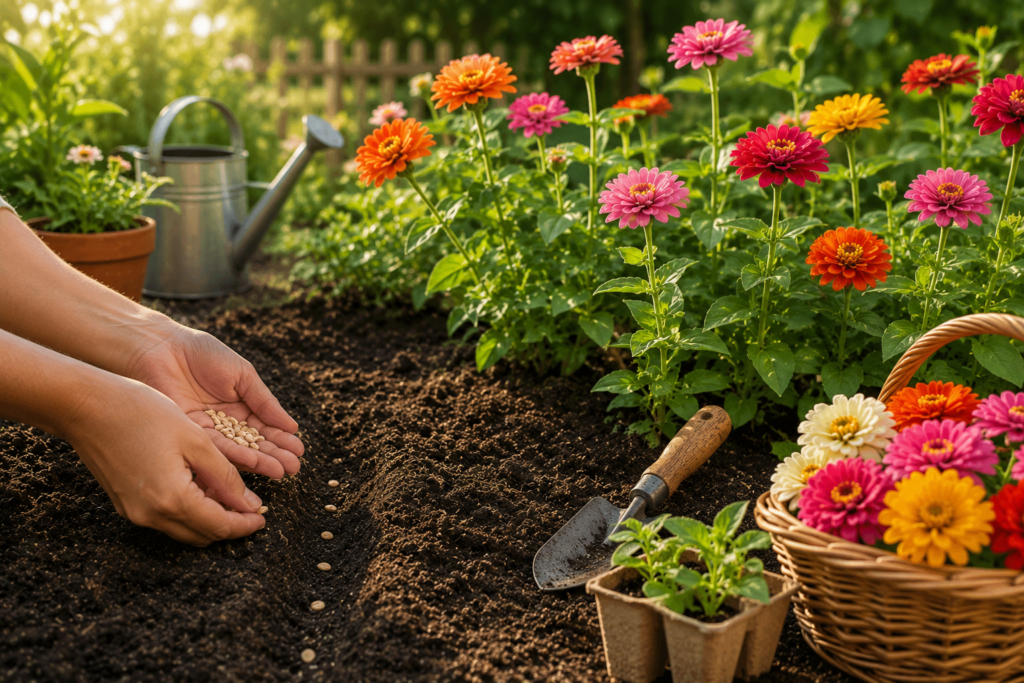
Planting zinnia seeds feels a little like hiding tiny secrets in the soil. At first, the seeds look dry and quiet. Then, after some warm days, small green leaves push up. A few weeks later, those little plants can become bright flowers in pink, red, yellow, orange, purple, white, and mixed colors. Clemson Extension says modern zinnias come in many colors, shapes, and sizes, and some can grow from 6 inches tall to 4 feet tall.
Zinnias are loved because they are easy to grow from seed. Wisconsin Horticulture says zinnias have large seeds that germinate quickly, grow into low-maintenance plants, and are a good choice for children and beginner gardeners. That is why planting zinnia seeds is a nice first garden job. You do not need to be a garden expert. You just need warm soil, sun, water, and a little patience.
What Are Zinnias?
Zinnias are warm-season flowers. They grow best when the weather is warm and sunny. Many common garden zinnias are annual flowers, which means they grow, bloom, make seeds, and finish their life in one growing season. Clemson Extension explains that there are many Zinnia elegans cultivars available today, and they can be found as seeds and transplants in garden stores.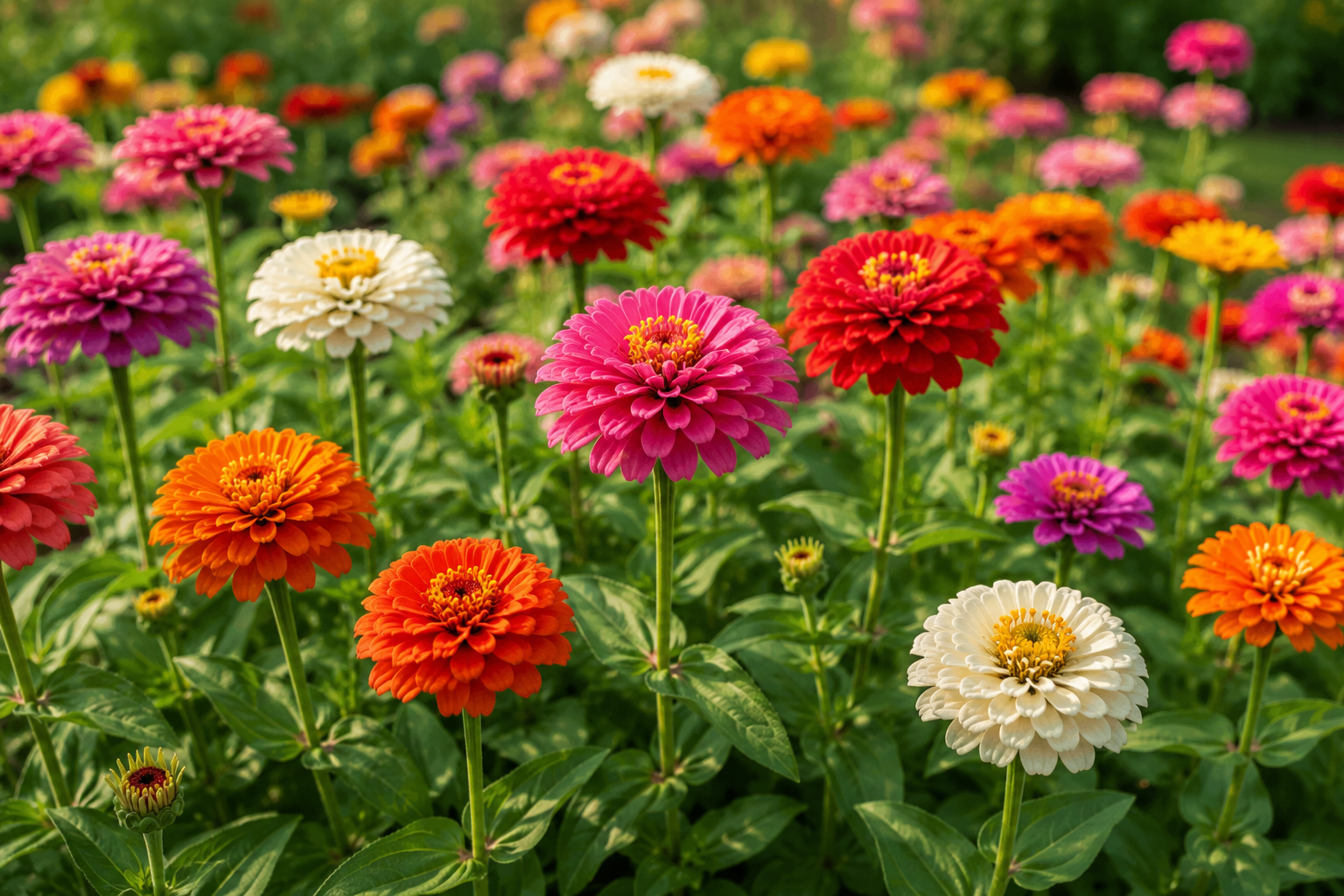
The best part is that zinnias do not only look pretty. They can also be used in borders, flower beds, containers, pollinator gardens, and cutting gardens. Wisconsin Horticulture says taller zinnias are excellent cut flowers, while many types work well in containers and garden beds. Clemson Extension also says zinnias are a good choice for cutting gardens and can last a week or more in a vase.
When to Plant Zinnia Seeds
The safest time for planting zinnia seeds outside is after the danger of frost has passed. Frost is cold enough to hurt warm-season flowers. Clemson Extension says zinnia seeds may be directly sown in the garden when the chance of the last frost has passed in spring, and the ideal soil and air temperature should be around 70°F. 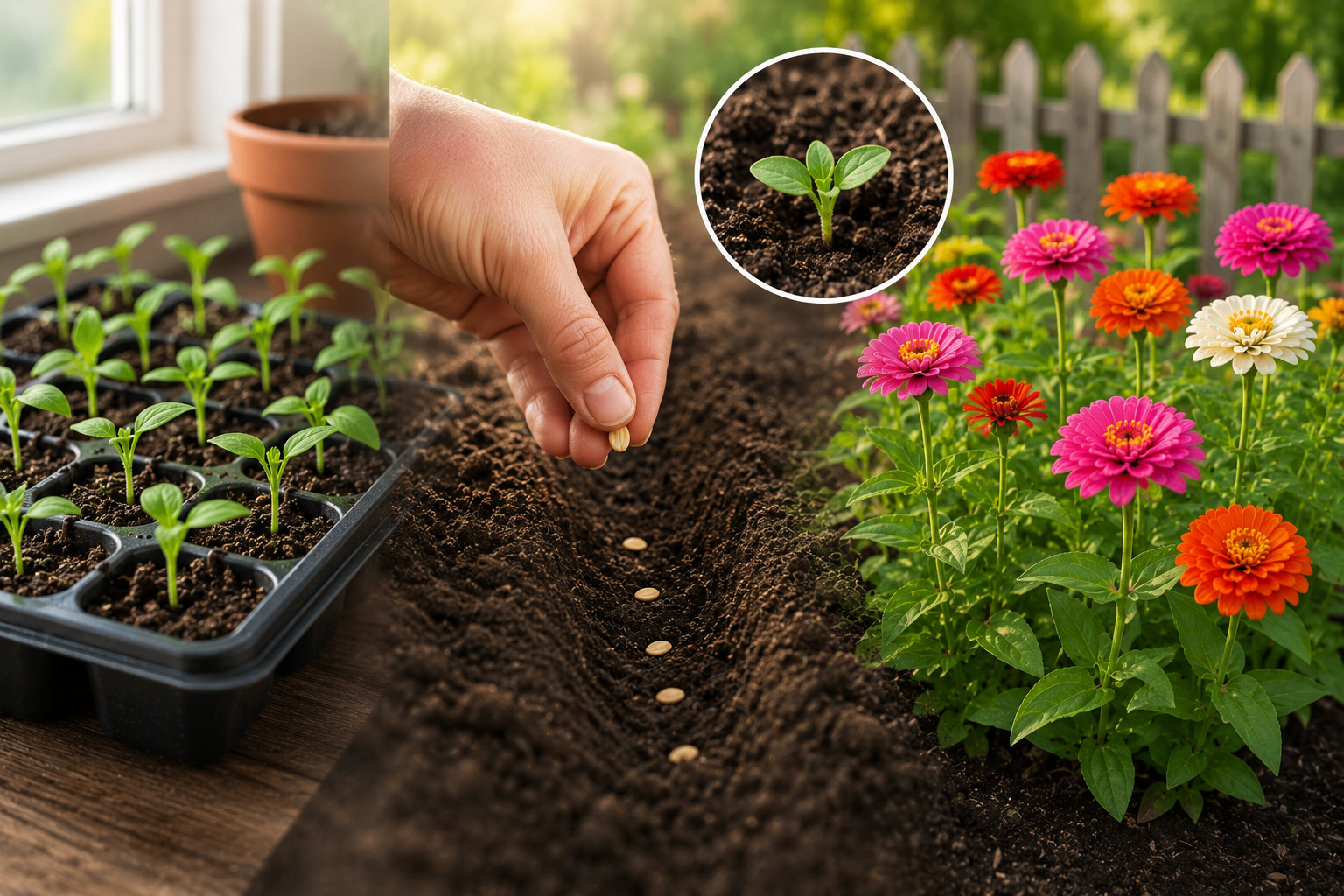
This means you should not rush too early. If the ground is still cold and wet, zinnia seeds may struggle. Floret also notes that zinnias do not like cold weather and prefer to be planted after things warm up. So, think of zinnias as summer-loving flowers. They want the garden to feel warm before they wake up and grow.
Starting Zinnia Seeds Indoors
Some gardeners start zinnia seeds indoors before outdoor planting time. This can help you get flowers a little earlier, especially if your warm season is short. University of Minnesota Extension says zinnia seeds can be started indoors about 6 weeks before the expected outdoor planting date. Floret says it starts seeds in trays 4 to 6 weeks before the last spring frost in cooler conditions. 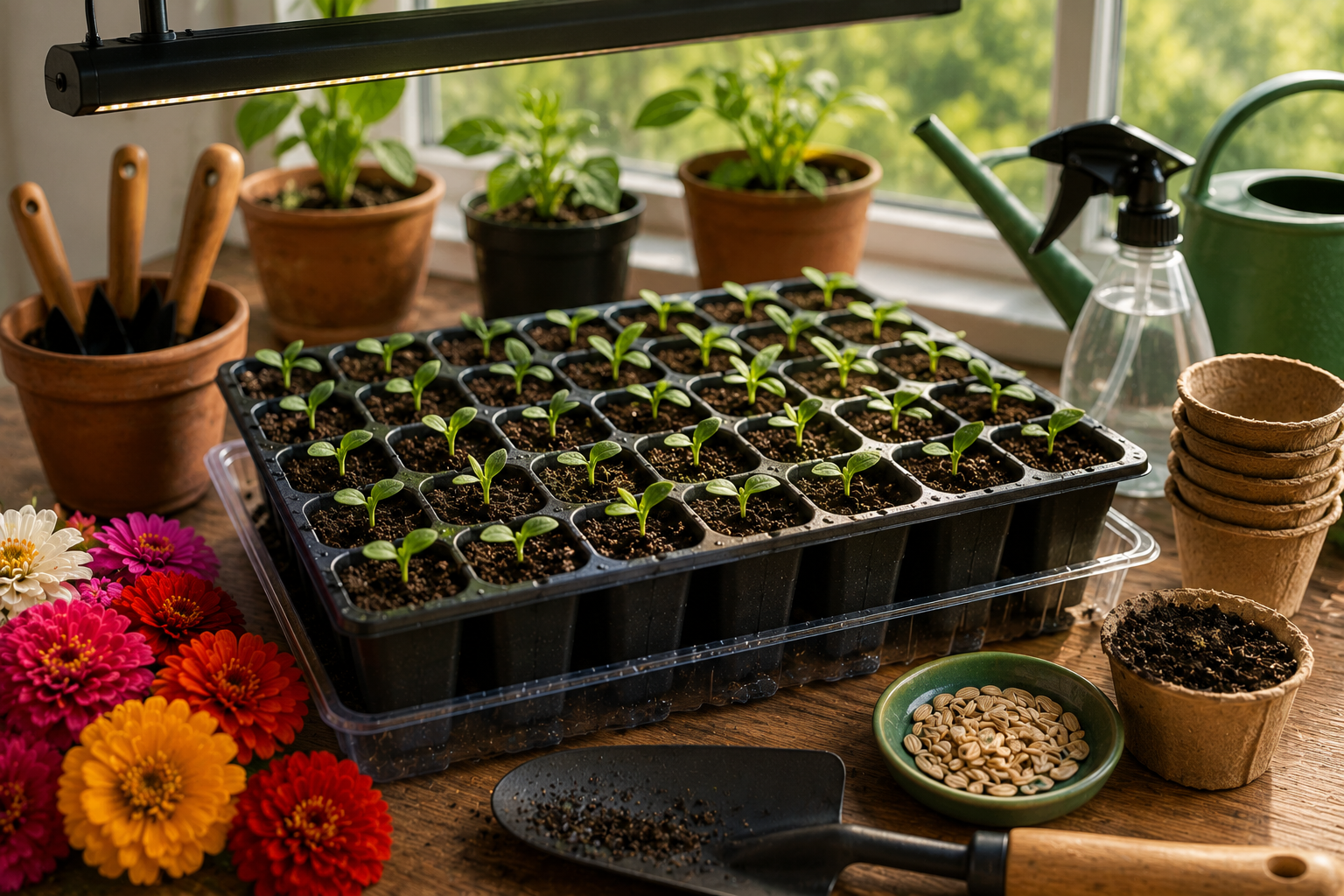
If you start seeds indoors, use a seed-starting mix, not heavy garden soil. University of Minnesota Extension says to use a growing medium made for germinating seeds. It also says zinnia seeds should be planted ¼ inch deep, kept moist, and can germinate in 4 to 8 days at 70 to 75°F.
There is one small thing to remember. Young zinnia plants do not like being stressed. Michigan State University Extension says zinnias can be transplanted or direct sown, and if you start transplants early, peat pots can help because they can be planted into the bed without disturbing the roots as much.
Planting Zinnia Seeds Outside
Direct sowing means planting the seeds straight into the garden soil. This is the simple way. You choose a sunny garden bed, loosen the soil, make a shallow line, place the seeds, cover them lightly, and water gently. Clemson Extension says zinnia seeds should be planted ¼ inch deep. 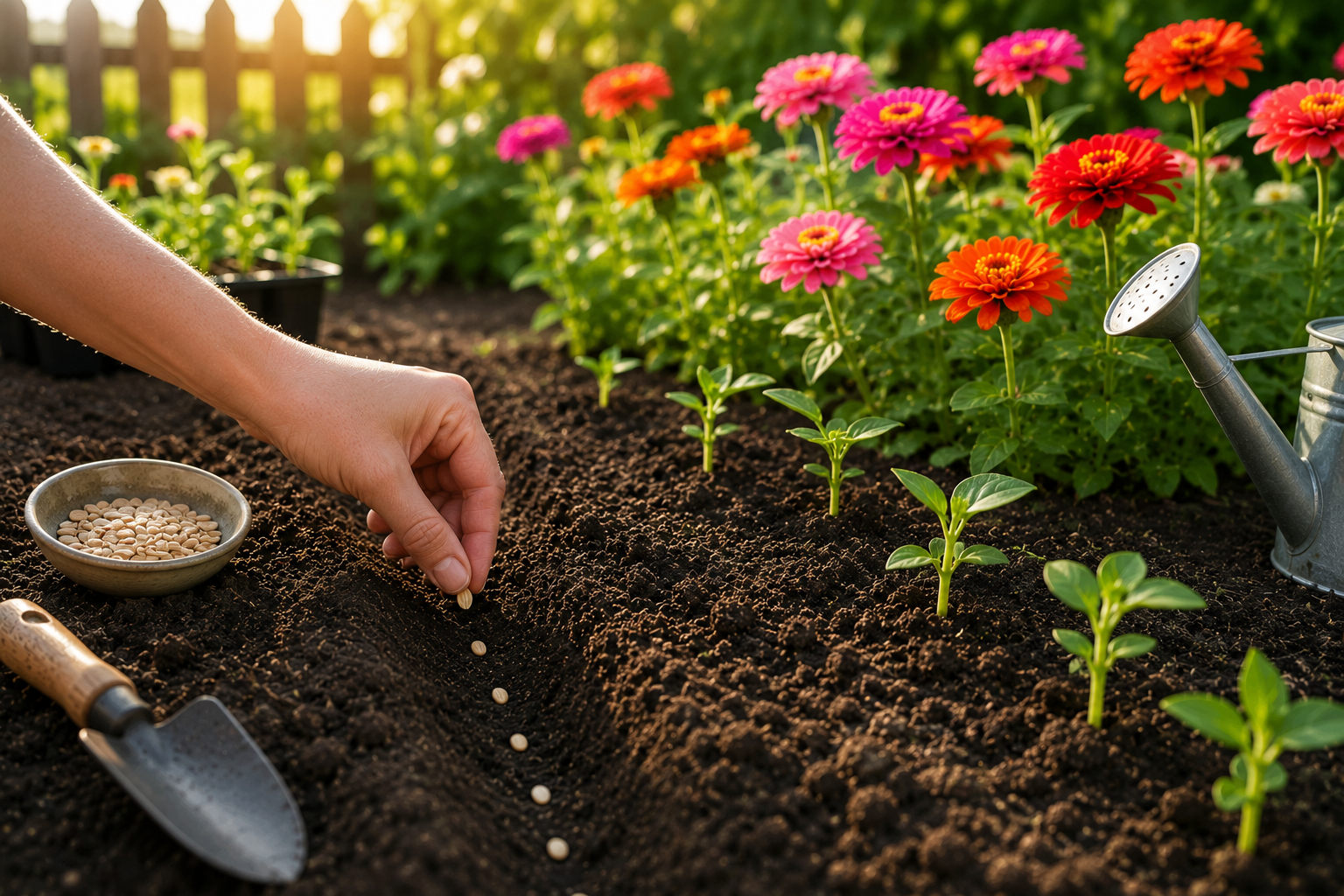
Do not bury the seeds too deep. A zinnia seed is small, and it needs only a light cover of soil. Think of it like tucking the seed into a thin blanket, not hiding it under a heavy pillow. After planting, keep the soil lightly moist while the seeds wake up. University of Minnesota Extension says the seed and growing medium should be kept moist during propagation.
Choose a Sunny Place
Zinnias need a bright place to grow well. Clemson Extension says zinnias prefer fertile, organically rich, well-drained soil with at least 6 hours of full sun. Wisconsin Horticulture also says zinnias grow best in full sun and well-drained soil. 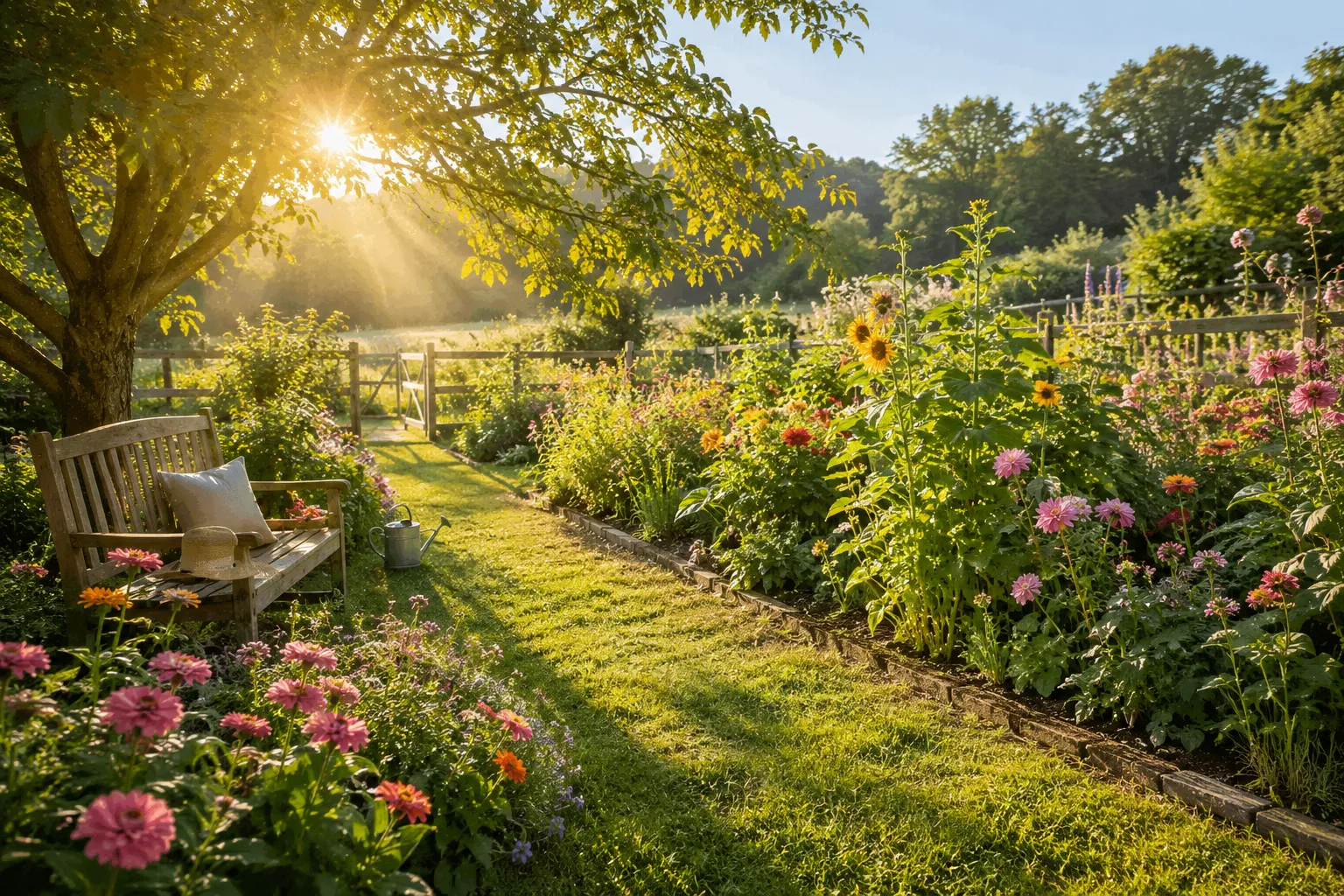
A sunny spot helps the plant make strong stems and many flowers. Gardeners’ World also says zinnias should be grown in well-drained soil in a sunny, sheltered spot. If your garden is windy, a sheltered place can help taller stems stay safer.
Prepare the Soil Before Planting
Good soil gives zinnia seedlings a strong start. Clemson Extension says zinnias prefer fertile, organically rich, well-drained soil. Well-drained soil means water can move through it instead of sitting around the roots for too long.
You can loosen the top of the soil before planting. If the soil is hard like a brick, the tiny roots may have a harder time growing. If the soil is too wet and sticky, the young plant can suffer. Zinnias can handle drier soil better than soil that stays too wet, and University of Minnesota Extension warns that too much water can cause fungal diseases.
Give Each Plant Enough Space
Spacing is very important when planting zinnia seeds. At first, seedlings are tiny, so it may feel fine if they grow close together. But soon, they become leafy plants. If they are crowded, air cannot move well between them. Clemson Extension says overcrowding increases disease problems, and proper air circulation helps dry leaves and prevent powdery mildew.
Clemson Extension says seedlings can be thinned when they are 3 inches tall, with final spacing from 8 to 24 inches depending on the type. It also says dwarf zinnias may be thinned 8 to 9 inches apart, while taller zinnias may need about a foot of space.
Thinning means removing extra seedlings so the strongest plants have room. It can feel sad to pull tiny plants, but it helps the remaining zinnias grow healthier. It is like giving each flower its own chair at the table.
Water the Right Way
Zinnias need water, but they do not want soggy soil. University of Minnesota Extension says to water zinnias regularly but not overwater them. It also says to water when the top 1 to 2 inches of soil are dry and to water at the base of the plant when possible.
Watering at the base means you aim water near the roots, not all over the leaves. Clemson Extension says getting the foliage wet can encourage leaf spot diseases. Gardeners’ World also says fungal disease risk can be reduced by keeping leaves dry and watering the soil at the base.
Help Zinnias Make More Flowers
Once zinnias start growing, you can help them make more blooms. University of Minnesota Extension says removing old blooms from the plant encourages new flowers. Gardeners’ World also says cutting fading flowers can encourage plants to produce more blooms. This is called deadheading.
Some gardeners also pinch young zinnia plants. Floret says pinching young plants when they are 8 to 12 inches tall can encourage more stems and more flower production. This is more useful when you want longer stems for cut flowers.
Watch for Powdery Mildew
Zinnias are beautiful, but they can get powdery mildew. This looks like pale powder on leaves. University of Minnesota Extension says zinnias are highly susceptible to powdery mildew, and prevention includes avoiding wet leaves and giving the plants plenty of air circulation. Wisconsin Horticulture also says spacing plants for air movement can help reduce powdery mildew problems.
This is why spacing, sun, and careful watering matter so much. A tidy zinnia bed with good air flow is easier to keep healthy than a crowded, wet bed where leaves stay damp.
Growing Zinnias in Pots
You can also grow zinnias in containers. Wisconsin Horticulture says many zinnia cultivars work wonderfully in containers. Gardeners’ World says compact types are good for containers because they do not need staking.
A pot should drain well. If water sits in the bottom, roots can suffer. A sunny patio, balcony, or doorstep can be enough for a small zinnia display if the pot has drainage and the plant gets enough light.
Zinnias for Bees, Butterflies, and Bouquets
Zinnias can bring more life to your garden. Clemson Extension says zinnias attract hummingbirds, butterflies, bees, and other pollinating insects. University of Minnesota Extension adds that if you want zinnias for pollinators, you should choose cultivars that still have pollen and nectar, because this trait has been bred out of some types.
They also make lovely cut flowers. University of Minnesota Extension says zinnias work well in cut flower displays because they come in many colors and petal forms, and changing vase water every two days helps displays look their best.
Final Thoughts
Planting zinnia seeds is a simple garden project with a big reward. You start with a small seed. You give it warm soil, sun, gentle water, and enough room. Then the garden slowly fills with color.
For a beginner, zinnias are friendly flowers. They grow quickly, bloom brightly, and teach useful garden lessons. You learn why warm soil matters. You learn why spacing matters. You learn that old flowers should be removed so new flowers can come. Most of all, you learn that a garden does not need to be perfect to feel special.
FAQs About Planting Zinnia Seeds
How deep should I plant zinnia seeds?
Plant zinnia seeds about ¼ inch deep. This depth is recommended by both Clemson Extension and University of Minnesota Extension.
When should I plant zinnia seeds outside?
Plant zinnia seeds outside after the danger of the last frost has passed and the weather has warmed. Clemson Extension says the ideal soil and air temperature should be around 70°F.
How long do zinnia seeds take to grow?
University of Minnesota Extension says zinnia seeds germinate in 4 to 8 days at 70 to 75°F. Clemson Extension says direct-sown zinnias can mature and bloom 8 to 12 weeks after planting.
Do zinnias need full sun?
Yes. Clemson Extension says zinnias need at least 6 hours of full sun, and Wisconsin Horticulture says they grow best in full sun and well-drained soil.
Why are my zinnias crowded and weak?
Crowding can reduce air flow and increase disease problems. Clemson Extension says zinnias should be properly spaced because overcrowding increases disease incidence, and air circulation helps prevent powdery mildew.