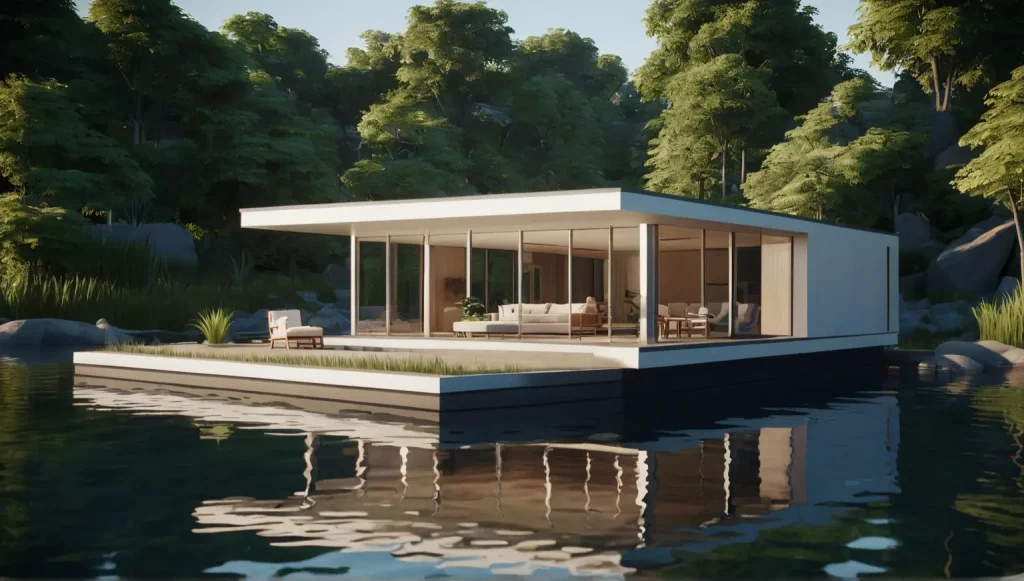
Floating houses are a new approach to a solution that integrates architecture, sustainability, and lifestyle in a different manner. Contrary to traditional buildings that are constructed on stable grounds, floating houses are made to rest on the surfaces of water bodies, bringing harmony between human settlement and aquatic life. This type of residence has been gaining popularity in many parts of the world, particularly in areas prone to flooding or rising sea levels, or where communities seek a closer connection to nature.
The Concept of Floating Houses
The concept of floating houses is not new. Ancient floating houses have been used in Asian, European, and South American cultures for centuries. Contemporary floating houses, however, combine modern designs, technology, and eco-friendly materials to create luxurious and convenient living environments. They are based on floating structures or hulls that support the building above water, ensuring stability and safety.
Benefits of Floating Houses
Floating homes offer a variety of advantages that make them attractive for modern living:
Flexibility to Rising Water Levels
Floating homes adapt to fluctuating water levels, providing a practical solution to climate change and rising sea levels. They rise and fall with the water, making them less vulnerable to floods compared to traditional homes.
Sustainable Living
Many floating houses are environmentally friendly. They are equipped with solar panels, rainwater harvesting systems, and green building materials, promoting energy-efficient and sustainable lifestyles.
Exclusive Style and Artistry
Living on water offers a relaxing and picturesque experience. Contemporary floating houses often feature large windows, terraces, and decks to maximize the connection to nature and surrounding landscapes.
Space Optimization
Floating homes make use of unused water bodies and are especially valuable in densely populated cities where land is scarce and expensive.
Architectural Features
Modern floating houses are designed with precision and innovation. Key architectural features include:
- Buoyant Foundations: Pontoons, reinforced platforms, or floating concrete bases provide stability and safety.
- Modular Design: Modular construction allows for easier expansion, relocation, and customization.
- Sustainable Materials: Wood, recycled composites, and lightweight concrete minimize environmental impact.
- Connection to Nature: Large windows, rooftop gardens, and open terraces allow residents to enjoy the surrounding water and greenery.
Examples Around the World
Netherlands
The Netherlands is a pioneer in floating structures. Cities like Amsterdam and Maasbommel feature stylish floating neighborhoods designed to withstand floods.
United States
Seattle and Sausalito are famous for floating home communities where modern design meets a water-bound lifestyle.
Asia
In Thailand and Vietnam, traditional floating homes have been adapted for contemporary tourism, allowing guests to enjoy a unique experience on rivers and lakes.
Challenges of Floating Homes
Despite their appeal, floating homes face some challenges:
- Maintenance: Constant attention is needed to manage water exposure and preserve structural integrity.
- Legal Regulations: Zoning laws, permits, and environmental restrictions vary and can limit construction.
- Utilities: Supplying electricity, sewage, and water can be more complex than for land-based homes, though technology is improving these systems.
The Future of Floating Homes
With urbanization, climate change, and environmental concerns on the rise, floating houses offer a compelling residential solution. Innovations in sustainable materials, energy-efficient designs, and water management make floating homes increasingly accessible. Luxurious floating villas and eco-friendly communities show that living on water is no longer niche—it is a modern lifestyle that balances comfort, creativity, and environmental responsibility.
Conclusion
Floating houses represent not only a new architectural approach but also a harmonious interaction with the natural environment. They address urban congestion, rising water levels, and sustainability concerns. Floating homes are shaping the future of residential living by offering sustainable, luxurious, and adventurous lifestyles on water.