Choosing the right house roof design is important for both beauty and protection. The right roof design for house improves durability, safety, and energy efficiency. Below are different types of roof explained in simple words, with 50 to 100 words for each type.
1.Open Gable Roof
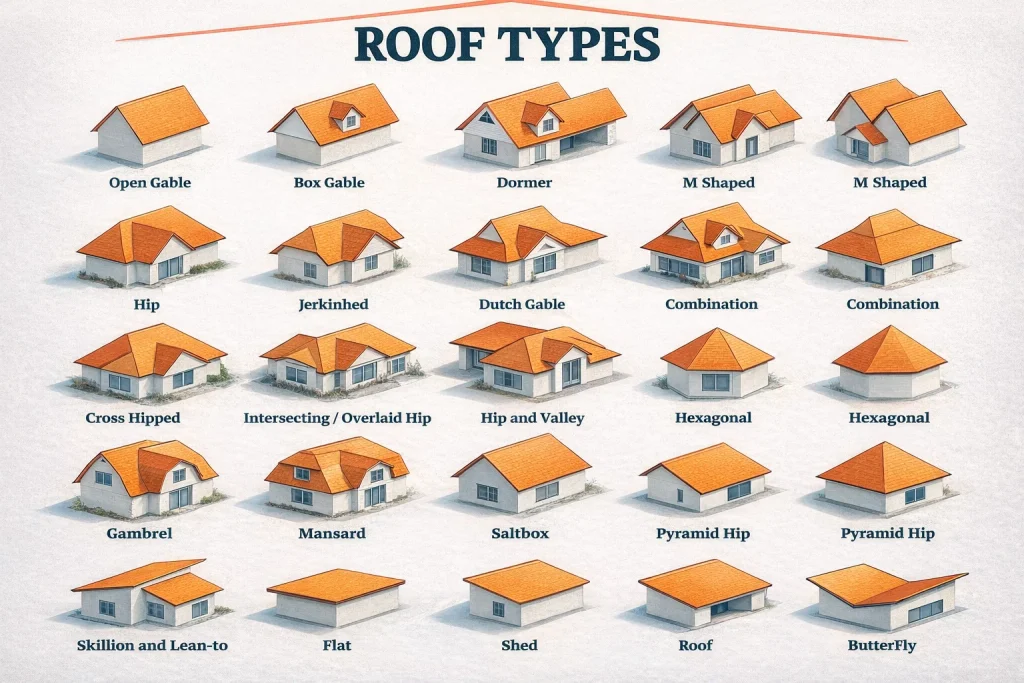
The Open Gable roof is one of the most common types of roofs on houses. It has two sloping sides that meet at the top, forming a triangle shape. This gable shape roof allows rain and snow to slide off easily, making it ideal for areas with heavy rainfall. It is affordable and simple to build, which makes it popular for small house roof design. However, strong winds can sometimes damage the open ends of the roof.
2.Box Gable Roof
The Box Gable roof is similar to a gable roof but the ends are covered, giving it a clean and finished look. This style adds extra protection against wind and rain while improving the appearance of the house. It is often seen in box roofed houses and traditional homes. Although it costs slightly more than an open gable roof, it provides better durability and gives a more polished house roofing design.
3.Dormer Roof
A Dormer roof is not a full roof type by itself but an extension added to an existing roof. It usually includes a vertical window that projects outward. This design increases space and natural light in upper floors or attics. Dormers are common in many house roof designs where extra room is needed. While they improve ventilation and appearance, they require proper planning and increase construction costs.
4.M-Shaped Roof
The M-Shaped roof looks like the letter “M” because it joins two gable roofs together. This unique roof house design is often used in large homes or buildings with multiple sections. It allows extra attic space and creates a striking architectural look. However, the complex roof structure types in this design may increase maintenance and construction costs compared to simpler roof types.
5.Hip Roof
A Hip roof has four sloping sides that meet at the top. Unlike a gable roof, it has no vertical ends. This makes it one of the most stable residential roof types, especially in areas with strong winds. It provides excellent drainage and long-term durability. Although hip roofs are more expensive to build, they are widely used in modern and traditional homes because of their strength and balanced design.
6.Jerkinhead Roof
The Jerkinhead roof, also called a clipped gable roof, combines features of hip and gable roofs. The top corners of the gable are slightly cut off, improving wind resistance. This type of roof design offers both style and stability. It is commonly used in residential types of roofs where extra strength is required. While attractive, its design is more complex than a standard gable roof.
7.Dutch Gable Roof
The Dutch Gable roof combines a hip roof with a small gable section on top. This clever house roofing design provides extra ventilation and space while maintaining stability. It improves the home’s appearance and adds architectural detail. This roof design house style is suitable for homeowners who want both beauty and functionality. However, the added design elements can increase overall construction cost.
8.Combination Roof
A Combination roof uses two or more different types of roofing styles in one structure. For example, it may combine gable and hip roofs. This allows flexible and creative roof ideas for house plans. It works well for large homes with complex layouts or multiple roofs. While combination roofs offer unique style and adaptability, they require skilled planning and higher building expenses.
9.Cross Hipped Roof
The Cross Hipped roof is formed when two hip roof sections intersect. This design is common in larger homes with wings or extensions. It provides excellent drainage and structural stability. Because of its multiple slopes, it handles rainwater efficiently and adds dimension to house roof designs. However, it involves more materials and labor, making it costlier than simple roof types.
10.Intersecting / Overlaid Hip Roof
The Intersecting or Overlaid Hip roof features two hip roof sections that overlap each other. This design creates a dynamic and elegant appearance often seen in luxury homes. It offers strong structural support and full coverage for large buildings. As part of modern roofing styles, it enhances both beauty and durability. However, it requires careful construction planning and can be expensive.
11.Hip and Valley Roof
The Hip and Valley roof is designed with multiple roof sections that meet to form valleys. This type of house roofing design works well for homes with complex layouts. It ensures proper water drainage and strong structural balance. Many modern roof design plans use this style for larger houses. However, the many joints and intersections increase construction time and maintenance needs.
12. Hexagonal Roof
The Hexagonal roof has six sides that meet at a central point. It is commonly used for small buildings like gazebos or decorative structures. This unique roof shape type creates an attractive visual effect. Although it looks impressive, it is rarely used in large residential homes due to its complicated design and higher construction cost.
13. Gambrel Roof
The Gambrel roof has two slopes on each side, with the lower slope steeper than the upper one. Often seen on barns, it provides extra attic space. This roof design for home projects adds a traditional and rustic look. It maximizes interior space without increasing the building footprint. However, it may not perform well in areas with strong winds or heavy snowfall.
14.Mansard Roof
The Mansard roof, also known as a French roof, features two slopes on all four sides. The lower slope is steeper, creating extra living space. This type of roof design is often used in elegant and classic homes. It allows homeowners to add additional floors or attic rooms. Although stylish and practical, it is more expensive and requires proper waterproofing.
15. Saltbox Roof
The Saltbox roof has one long sloping side and one shorter side, giving it an uneven shape. This traditional roof type originated in colonial architecture. It offers good wind resistance and efficient drainage. While it provides a distinctive appearance, the shorter side may reduce usable interior space. It remains one of the unique kinds of roof design still used today.
16.Pyramid Hip Roof
The Pyramid Hip roof has four triangular sides that meet at one central point. It is ideal for small homes or square buildings. This residential roof type is known for its strength and balance. It performs well in windy climates and provides even weight distribution. However, it offers limited attic space compared to other roof types.
17.Skillion / Lean-to Roof
The Skillion roof, also called a lean-to roof, has a single sloping surface. It is one of the simplest modern roofing types. This design is common in modern house roof projects and home extensions. It allows easy installation of solar panels and provides a clean, minimalist look. However, it may not suit traditional architectural styles.
18.Flat Roof
A Flat roof appears level but includes a slight slope for drainage. It is widely used in modern roof design and urban homes. This open roof design can be used as a terrace, garden, or seating area. It is cost-effective and easy to build. However, proper waterproofing is necessary to prevent water leakage and long-term damage.
19.Shed Roof
The Shed roof is a single-pitch roof similar to a skillion roof. It is simple, affordable, and suitable for small buildings or extensions. This roof design is popular in modern house roofs because of its clean lines. It allows rainwater to drain quickly. However, it provides limited attic storage and may look too basic for some homeowners.
20.Butterfly Roof
The Butterfly roof forms an inverted V shape, also known as a V roof house design. It is one of the latest roofing designs in modern architecture. This roof collects rainwater in the center, making it eco-friendly. It also allows large windows for natural light. While stylish and unique, it requires careful drainage planning and can be expensive to build.