A Moroccan house is not just a house but a world of art shaped through centuries of history, handwork, and colorful traditions. With their intense color schemes, geometric designs, handcrafted details, and serene courtyards, Moroccan houses reflect the true essence of North Africa. Whether found in the ancient medinas of Marrakech or along the peaceful shores of Essaouira, these homes offer a magical blend of comfort, opulence, and cultural richness that continues to inspire designers worldwide.
A Tour to the Essence of Moroccan Buildings
Moroccan houses are known for their dramatic beauty and cultural authenticity. Their architecture is influenced by Berber, Arab, Moorish, and Andalusian styles, creating a harmonious blend of elegance and historical character.
Complex Geometric Geometry
Moroccan design is known for its seductive geometric patterns — a symbolic language representing life, spirituality, and infinity. These patterns appear on tiles, ceilings, wooden screens, carpets, and even window frames.
Zellige Tilework
One of the most recognizable features is zellige, the handmade mosaic tilework crafted from clay and glaze. These colorful tiles are arranged in repetitive geometric shapes, creating stunning walls, fountains, and floors.
Horseshoe Arches & Carved Doors
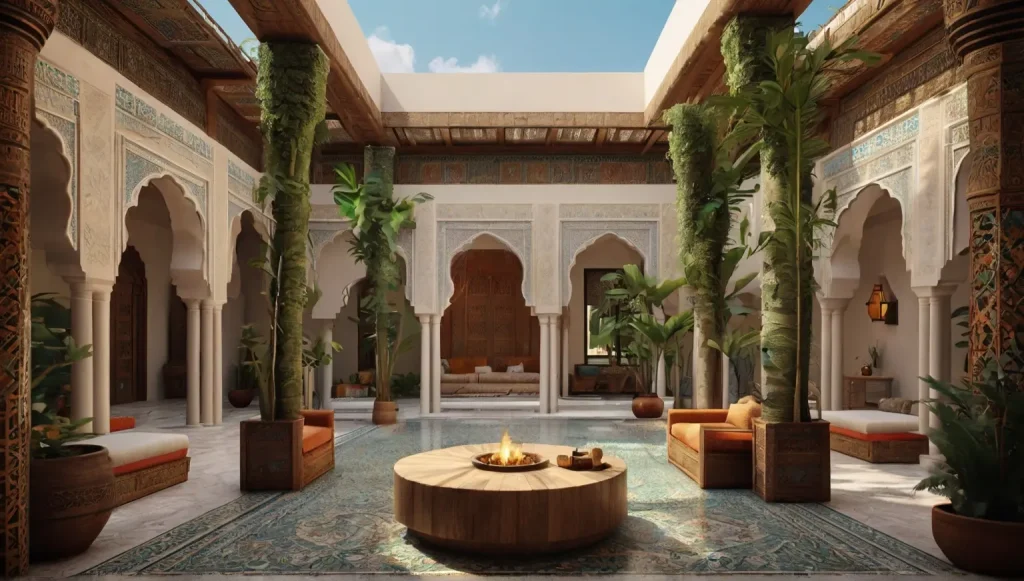
Traditional Moroccan architecture often features arched doorways in horseshoe or keyhole shapes. Grand wooden doors carved with floral and geometric motifs add a royal touch to the entrance.
Riads & Central Courtyards
Most Moroccan homes are built around a central courtyard, often featuring a fountain, plants, and open sky. These peaceful areas provide privacy, ventilation, and a calm sanctuary within the home.
The Climate of a Moroccan House
Stepping into a Moroccan home is like entering a different world — warm, welcoming, and artistic.
A Symphony of Colors
The interior color palette is expressive and vibrant, featuring:
- Deep reds
- Blue Chefchaouen tones
- Gold and bronze shades
- Emerald greens
- Earthy terracotta
These colors create a lively and warm atmosphere within the home.
Soft Lighting & Lanterns
Handcrafted brass lanterns, pendant lights, and pierced metal lamps create a magical ambience with shadows dancing across the walls. This soft lighting transforms the home into a peaceful haven.
A Juxtaposition of Dolce & Gabbana and Tradition
Modern Moroccan houses beautifully blend contemporary luxury with tradition. Mosaic walls, Berber rugs, handcrafted furniture, and tadelakt plaster remain essential elements of the design.
Sabiq Moroccan House Interior Design
Every room in a Moroccan house tells a story through its patterns, textures, and craftsmanship. Key interior features include:
Zellige Tile Flooring
Colorful geometric tiles create rich, artistic, and authentic flooring.
Tadelakt Walls
This traditional polished plaster is smooth, waterproof, and commonly used in bathrooms and courtyards.
Low Seating & Majlis Style
Low cushioned seating arranged along the walls creates an inviting atmosphere for social gatherings — a hallmark of Moroccan hospitality.
Handwoven Textiles
Moroccan homes are adorned with:
- Berber rugs
- Kilim carpets
- Embroidered cushions
- Wool blankets
These textiles add warmth, softness, and cultural depth to interiors.
Wooden Carvings
Doors, cabinets, and ceilings often feature detailed carvings that showcase the craftsmanship of Moroccan artisans.
The Inspiration Behind Moroccan Houses and the World
Interest in Moroccan houses continues to rise for many reasons:
A Rich Cultural Experience
Every corner reflects history, craftsmanship, and storytelling.
Timeless Design
Their combination of color, geometry, and handcraft keeps Moroccan style always in demand.
Perfect for Hot Climates
Thick walls, courtyards, and ventilation systems naturally cool the home.
Highly Photogenic
From zellige tiles to majestic arches, Moroccan homes are visually stunning and ideal for photography or design inspiration.
Luxurious Yet Earthy
Natural materials blend with royal elegance, creating a grounded yet sophisticated atmosphere.
Tradition and Innovation in Modern Moroccan Houses
Modern Moroccan homes preserve traditional elements while incorporating contemporary styles, such as:
- Minimalist zellige tile designs
- Solid colors mixed with vintage patterns
- Modern furniture with handcrafted details
- Open, airy interiors
- Sustainable and eco-friendly construction
This combination results in luxurious, comfortable homes with a strong Moroccan identity.
Final Thoughts
A Moroccan house is not only a type of architecture — it is a celebration of art, color, and cultural history. It blends luxury with tradition, sophistication with warmth, and beauty with practicality. Whether you aspire to create a Moroccan-inspired home or simply admire the intricate details, Moroccan houses stand as a true tribute to creativity, craftsmanship, and timeless elegance.