For many years, people painted their ceilings white and used different colors on the walls. White ceilings became very common because they made rooms look bright and simple. But now, many homeowners and interior designers are trying something different. They are painting the ceiling and walls the same color.
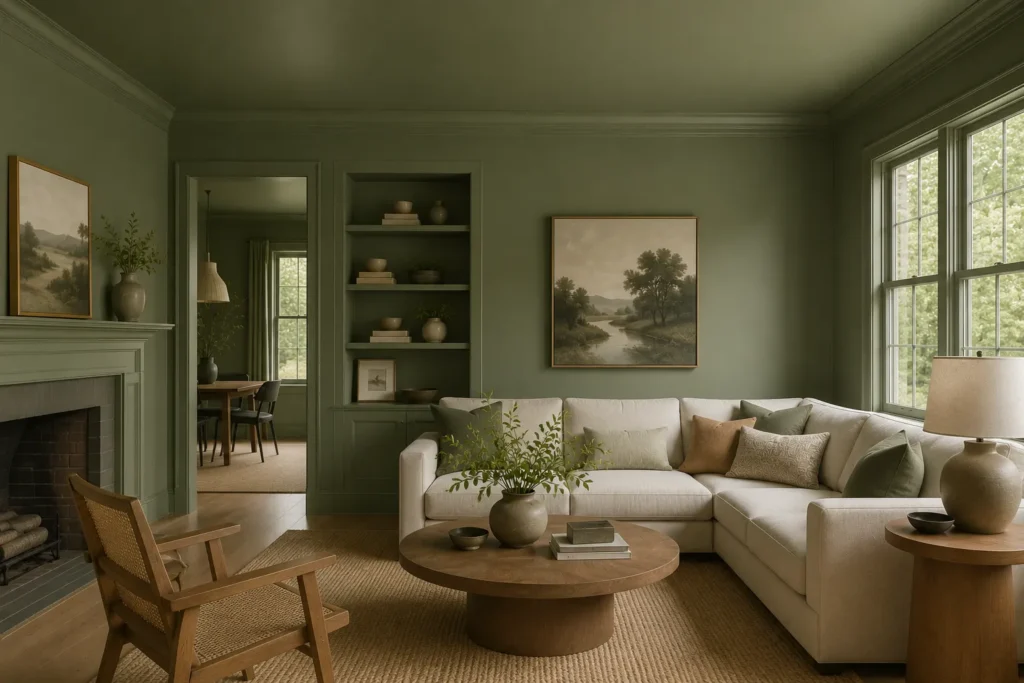
This paint style is becoming popular in modern homes because it makes rooms feel soft, cozy, and stylish. Designers often call this trend “color drenching.” This means using one paint color across the walls, ceiling, trim, and sometimes even doors.
Painting ceilings and walls the same color can completely change how a room looks and feels. It can make small rooms feel larger, help tall rooms feel warmer, and create a smooth and relaxing design.
However, this style is not perfect for every space. Some rooms may feel darker or too enclosed if the wrong color is used. That is why it is important to understand both the advantages and disadvantages before starting your painting project.
In this guide, you will learn the pros, cons, and best design tips for painting ceilings and walls the same color.
What Does It Mean to Paint the Ceiling and Walls the Same Color?
Painting the ceiling and walls the same color means using one paint shade across the entire room instead of using white paint on the ceiling.
Some people use the exact same paint finish everywhere. Others use the same color but choose different finishes. For example, they may use matte paint on the ceiling and eggshell paint on the walls.
This design style creates a seamless look because there are no strong lines separating the ceiling from the walls. The room feels smoother and more connected.
Interior designers often use this method in bedrooms, living rooms, dining rooms, offices, and even bathrooms. It works well in both modern and traditional homes.
Why This Paint Trend Is Becoming Popular
Many people today want their homes to feel calm and comfortable. Painting the walls and ceiling the same color helps create that peaceful feeling.
Social media and home design magazines have also made this trend more popular. Designers now use color drenching to create rich, stylish interiors with personality.
People also like how simple this paint style looks. Instead of breaking up the room with different colors, the whole space feels unified.
This style works especially well with soft earth tones, warm neutrals, dusty blues, olive greens, beige colors, and muted grays.
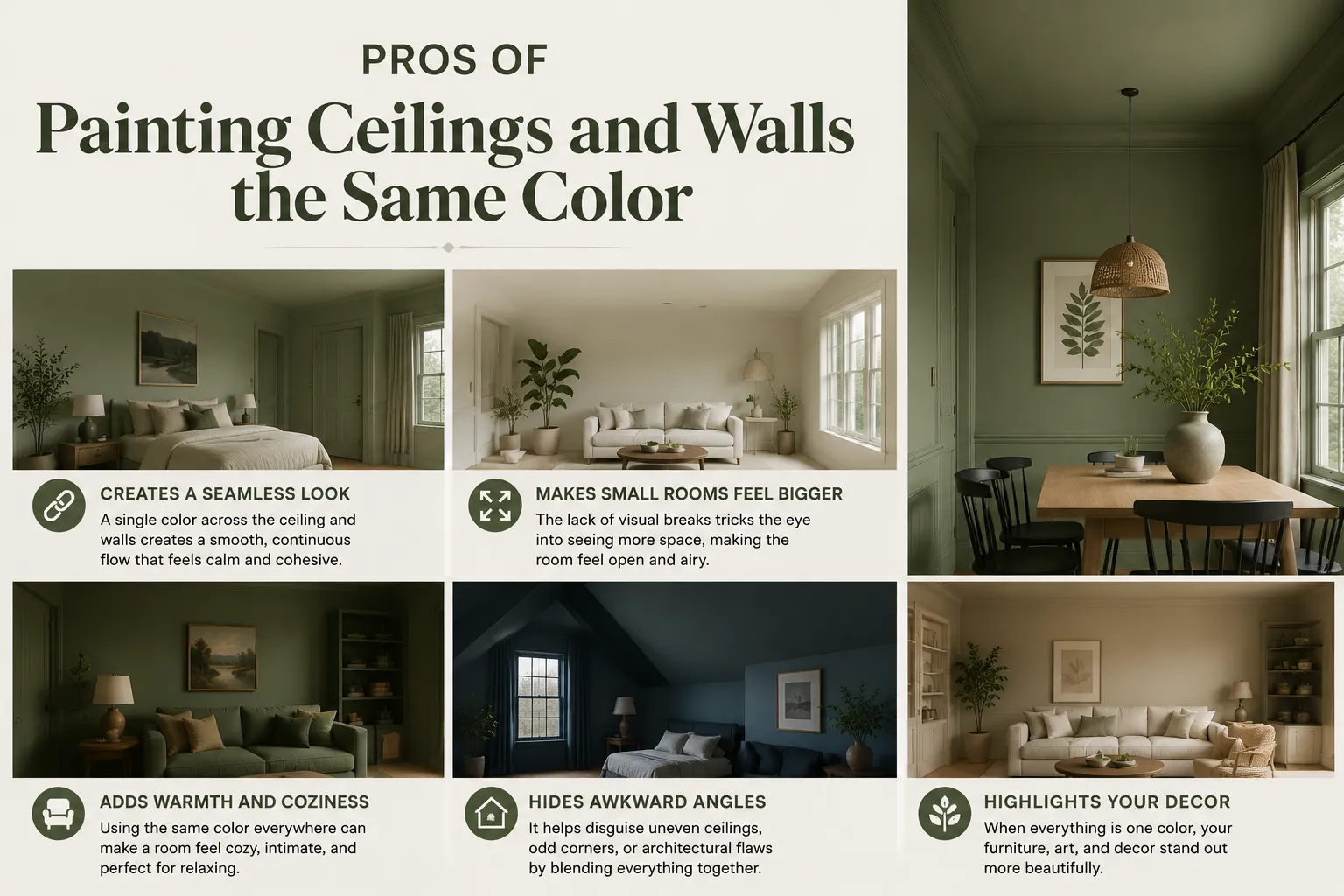
Pros of Painting Ceilings and Walls the Same Color
 Creates a Seamless Look
One of the biggest benefits of using the same paint color is that the room feels smooth and connected.
When the ceiling is white and the walls are darker, your eyes notice the line where the wall meets the ceiling. But when both surfaces use the same color, that line almost disappears.
This creates better visual flow and makes the room feel softer and more balanced.
Many interior designers use this trick to create elegant and modern spaces.
Makes Small Rooms Feel Bigger
Painting walls and ceilings the same color can make a small room feel larger.
Without a harsh color change between the ceiling and walls, your eyes move naturally around the room. This can create the feeling of more space.
Light paint colors work especially well for this effect. Soft gray, warm cream, pale blue, and gentle green can help brighten a room while still keeping the design cohesive.
Small bedrooms, bathrooms, hallways, and offices often benefit from this paint idea.
Makes Large Rooms Feel Cozy
While this technique can help small rooms feel bigger, it can also make large rooms feel warmer and more comfortable.
Tall ceilings sometimes make rooms feel cold or empty. Using the same paint color across the entire room helps bring the space together.
Dark paint colors like deep green, navy blue, charcoal gray, or chocolate brown can create a cozy atmosphere that feels relaxing and intimate.
This is one reason why many people use color drenching in libraries, dens, and bedrooms.
Adds Drama and Style
Painting the ceiling and walls the same color can make a room look more dramatic and luxurious.
Bold paint colors create strong mood and personality. Instead of the ceiling disappearing, it becomes part of the design.
This works beautifully in modern interiors and designer-inspired homes.
Dark colors can feel rich and sophisticated, while lighter tones can feel calm and elegant.
Many homeowners now use this style to make their spaces look more custom and high-end.
Hides Awkward Corners and Angles
Some rooms have sloped ceilings, uneven walls, strange corners, or unusual shapes.
Using different colors can make these imperfections stand out more. But when everything is painted the same color, the surfaces blend together.
This helps hide awkward architectural details and creates a cleaner appearance.
Attic bedrooms and older homes often benefit from this technique.
Highlights Furniture and Decor
When the walls and ceiling are the same color, furniture and decorations often stand out more clearly.
Wood furniture, artwork, mirrors, rugs, curtains, and lighting fixtures become the focus of the room.
This allows homeowners to create a calm background while letting their decor shine.
Neutral paint colors work especially well for this design style.
Cons of Painting Ceilings and Walls the Same Color
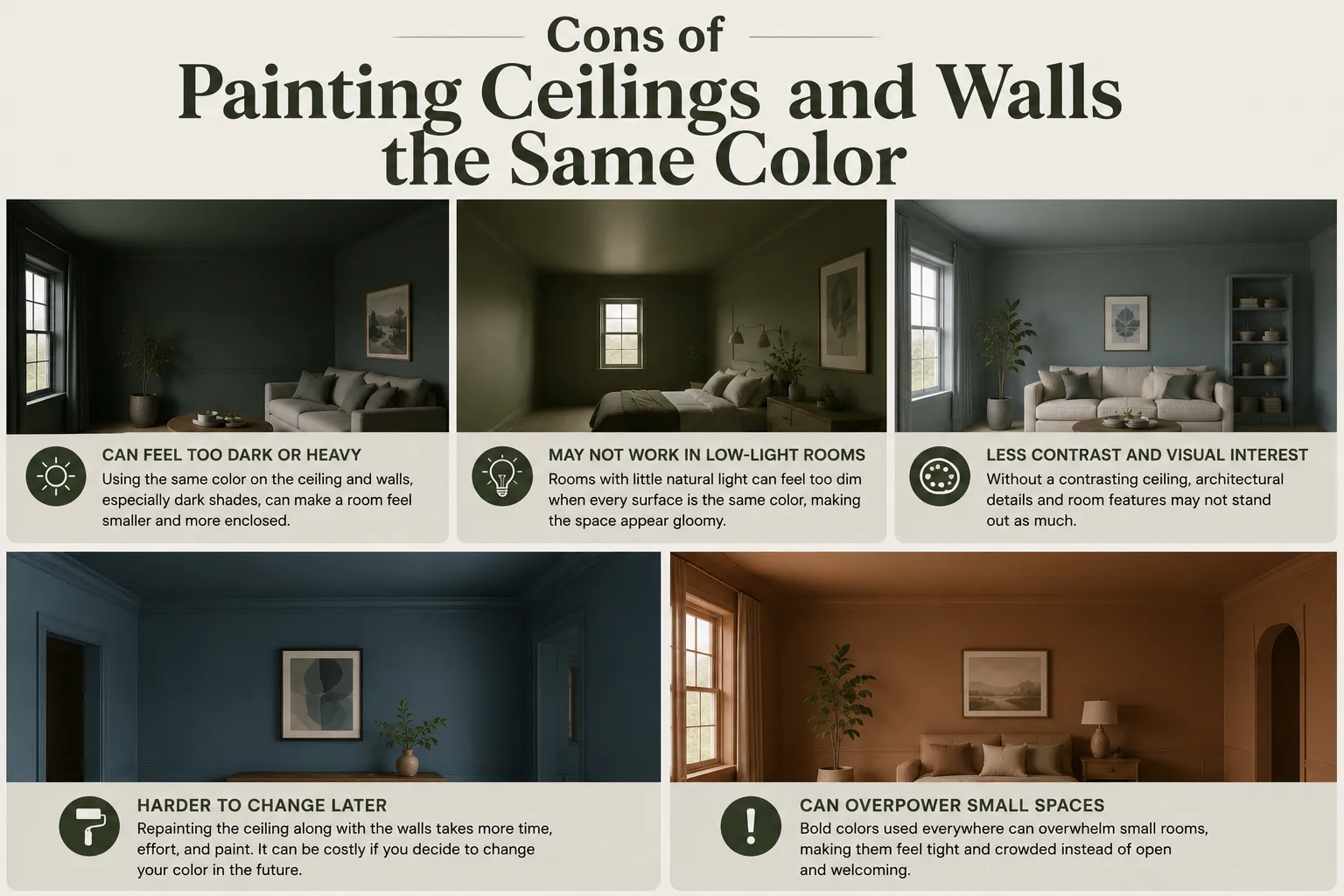 Dark Colors Can Feel Heavy
One of the biggest downsides is that dark paint colors may make some rooms feel too enclosed.
If a room does not get much natural light, deep colors on both the walls and ceiling can create a heavy feeling.
Small spaces with very dark paint may sometimes feel cramped instead of cozy.
This is why lighting is very important when using this painting style.
Not Every Room Works Well
Some rooms simply look better with a white ceiling.
For example, rooms with very low ceilings may feel shorter when painted the same dark color throughout.
In spaces with little sunlight, using one dark color everywhere can remove brightness from the room.
Every room is different, so it is important to test colors before painting the whole space.
Less Contrast in the Room
White ceilings naturally create contrast with painted walls.
When everything becomes one color, some architectural details may disappear.
People who love bright contrast and sharp lines may not enjoy the softer appearance of color drenching.
This style is better for homeowners who prefer calm and smooth interiors.
Harder to Change Later
Painting the entire room one color takes commitment.
If you decide later that you do not like the style, repainting the ceiling can take extra time and work.
Bold paint colors may also go out of style faster than neutral tones.
That is why many designers recommend starting with soft or muted colors first.
Best Paint Colors for This Style
Soft Neutral Colors
Neutral colors are the safest and most popular choice.
Warm beige, creamy white, light gray, taupe, and soft greige create peaceful and timeless rooms.
These colors work in almost every home style.
Earthy Green Shades
Olive green, sage green, and moss green are very popular right now.
These shades feel natural, relaxing, and cozy.
Green also works beautifully with wood furniture and plants.
Dusty Blues
Muted blue colors create a calm atmosphere.
Soft blue bedrooms often feel peaceful and relaxing.
Darker blues can add elegance and drama without feeling too harsh.
Warm Browns and Terracotta
Earthy browns and clay-inspired paint colors create warmth and comfort.
These shades work especially well in living rooms and dining rooms.
They also pair nicely with natural textures like wood, linen, and leather.
Choosing the Right Paint Finish
Paint finish matters just as much as paint color.
Most designers recommend matte or flat paint for ceilings because it hides imperfections better.
Walls often use eggshell or satin finishes because they are easier to clean.
Some homeowners use the same finish everywhere for a smoother appearance.
Shiny ceilings are usually avoided because they can highlight bumps and uneven surfaces.
Design Tips for Better Results
 Test Paint Samples First
Paint colors can look very different depending on sunlight and indoor lighting.
Always test a few paint samples before making your final choice.
Look at the color during the morning, afternoon, and evening.
This helps you avoid surprises after painting the whole room.
Think About Natural Light
Rooms with large windows can handle darker paint colors more easily.
Spaces with little natural light often look better with lighter shades.
Lighting changes how paint appears, so always consider the room’s brightness.
Add Texture to the Space
When the walls and ceiling are the same color, texture becomes more important.
Soft rugs, woven baskets, wood furniture, curtains, pillows, and artwork help create balance and warmth.
These textures stop the room from looking flat or boring.
Use Trim Carefully
Some people paint the trim and molding the same color too.
Others leave the trim slightly lighter or darker for contrast.
Both options can work well depending on the style you want.
Painting trim the same color often creates a more modern and seamless design.
Start with Smaller Rooms
If you are nervous about trying this paint trend, start with a smaller room first.
Bathrooms, guest bedrooms, reading nooks, and home offices are great places to experiment.
This helps you understand how color drenching works before using it in larger spaces.
Is This Paint Trend Worth Trying?
Painting ceilings and walls the same color is a creative way to transform a room.
It can make spaces feel bigger, softer, warmer, and more stylish. It also creates a cozy atmosphere that many homeowners love.
At the same time, the wrong paint color or poor lighting can make a room feel dark or heavy.
The key is choosing the right color, testing samples first, and thinking carefully about the room’s size and lighting.
This trend works best for people who enjoy calm, seamless interiors with a modern designer feel.
Final Thoughts
Painting the ceiling and walls the same color is no longer just a designer trick. It has become one of the most popular interior design ideas for modern homes.
This style creates visual flow, adds personality, and helps rooms feel more connected. Whether you choose a soft neutral shade or a bold dramatic color, the right paint can completely change your space.
With good lighting, thoughtful color choices, and the right paint finish, color drenching can make your home feel warm, beautiful, and welcoming.