A Small Change That Makes a Big Difference
A few years ago, my friend painted one wall in his bedroom dark blue. Before that, the room looked plain and quiet, almost like nobody lived there. But after painting that one wall, the whole room felt warm and cozy. Even his old wooden chair looked better next to it. That is the magic of wall painting.
Many people think paint is only about changing color. But wall painting techniques can do much more than that. They can make a room feel bigger, softer, brighter, calmer, or even more exciting. Some painting styles add texture. Some create patterns. Some make walls look like stone, clouds, or shiny metal.
The best thing is that you do not always need expensive furniture to make a room beautiful. Sometimes a simple paint technique can completely change the feeling of a space.
In this article, you will discover 10 stunning wall painting techniques that can transform any room in a simple and creative way.
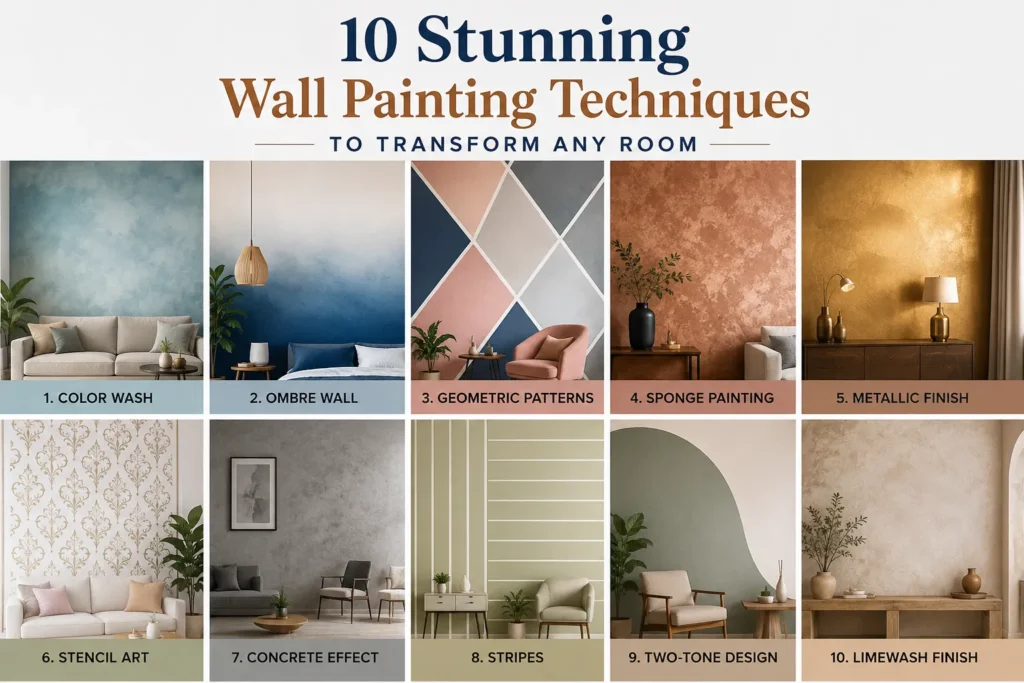
1. Color Wash Technique
Color wash painting gives walls a soft and cloudy look. It is one of the oldest decorative wall painting techniques, and many people still love it because it feels warm and peaceful.
This technique uses a thin layer of paint mixed with glaze. Instead of looking flat, the wall gets light and dark shades that blend together gently. Benjamin Moore explains that color washing helps create depth and texture on walls.
Imagine looking at the sky during sunset. The colors softly mix together instead of stopping in hard lines. That is what a color wash wall feels like.
This style works beautifully in bedrooms, living rooms, and reading corners. Soft beige, dusty blue, light gray, and warm cream are common choices. When sunlight touches the wall, the texture becomes even more beautiful.
A friend once used color wash paint in a small apartment hallway. Before painting, the hallway felt narrow and boring. After the paint dried, the walls looked soft like old Italian plaster. Guests kept touching the wall because they thought it was fabric.
That is why color wash painting remains popular in modern interior wall design.
2. Ombre Wall Painting
Ombre wall painting looks like colors melting into each other. The paint slowly changes from dark to light or from one color into another.
Dulux describes ombre walls as a smooth color gradient that creates a calm and creative feeling inside a room.
Children usually love this style because it feels dreamy. A sky-blue ombre wall can look like clouds floating in the room. Pink fading into peach can make a bedroom feel soft and cheerful.
But ombre walls are not only for kids. Many modern homes now use gray ombre walls in offices and living rooms because they feel stylish without looking too busy.
The secret to a good ombre wall is blending. The paint must mix while it is still wet so the colors look smooth. Some people use brushes while others use rollers or sponges.
One café owner painted an ombre wall behind the coffee counter using deep green fading into light sage. Customers started taking pictures there every day because the wall became the most interesting part of the shop.
Sometimes one painted wall can become the whole personality of a room.
3. Geometric Wall Painting
Geometric wall painting uses shapes like triangles, squares, and lines to create modern designs.
This painting style became very popular because it is simple but bold. Even plain walls can suddenly look artistic with a few clean shapes and strong colors.
Painter’s tape is very important for this technique. Behr explains that painter’s tape helps create sharp and clean lines during wall painting projects.
Many people choose black and white geometric walls because they look modern and neat. Others use soft colors like blush pink, navy blue, olive green, or beige.
One teenager painted large mountain shapes on his bedroom wall using gray and white paint. The room instantly looked more creative, almost like a designer room from a magazine.
Geometric wall painting works especially well in study rooms, offices, gaming rooms, and modern apartments. It gives walls energy without needing expensive decorations.
4. Sponge Painting
Sponge painting is fun because it feels almost like art class at school.
This technique uses a sea sponge to dab paint onto the wall. Sherwin-Williams explains that sponge painting helps create texture and depth by layering colors gently.
The final wall does not look perfectly smooth. Instead, it looks soft, textured, and natural.
Many people use earthy colors like sand, cream, olive, or terracotta for sponge painting because those shades make rooms feel warm and comfortable.
A small restaurant near my neighborhood used sponge painting on its walls in warm brown and gold colors. The lights reflected softly on the textured paint, and the whole place felt cozy even during rainy evenings.
Sponge painting is also forgiving. Tiny mistakes usually disappear into the texture, which makes it beginner-friendly.
That is one reason many homeowners still love this decorative wall painting style.
5. Metallic Finish Walls
Metallic walls shine gently when light hits them. They can make a normal room feel rich and elegant.
This technique uses special paint with metallic particles inside. Gold, silver, bronze, and pearl shades are common choices.
The Spruce mentions metallic paint as a decorative wall finish that creates dramatic and luxurious effects.
Some metallic walls are bold and shiny, while others are soft and subtle. A soft champagne gold wall behind a dining table can completely change the mood of the room.
One hotel lobby used metallic bronze paint with warm yellow lighting. People often stopped just to admire the walls because they looked smooth like silk.
Metallic finishes work best as accent walls instead of covering every wall in a room. Too much shine can feel overwhelming, but one feature wall can look stunning.
6. Stencil Wall Art
Stencil wall art is like drawing patterns on walls with a guide.
Instead of painting freehand, people place a stencil pattern on the wall and paint over it carefully. The result can look similar to wallpaper.
The Spruce explains that stenciling is a budget-friendly way to create decorative wall patterns without buying expensive wallpaper.
Flowers, leaves, Moroccan shapes, and tiny geometric designs are very popular.
A family once decorated their dining room with stencil vines painted in soft gray over white walls. It looked handmade and personal, almost like something from an old storybook home.
Stencil painting allows creativity without needing professional artistic skills. Even simple patterns can make walls feel alive.
7. Concrete Effect Painting
Concrete effect walls are very popular in modern homes today.
This technique makes walls look like real cement or stone. Even though it is paint, the wall feels industrial and stylish.
Gray shades are the most common, but some people use warmer concrete tones with beige or taupe colors.
Concrete effect walls work beautifully with wooden furniture, black lamps, and minimal decorations. The room feels calm and modern instead of crowded.
A small office near the city center painted its meeting room with a concrete finish wall. Before painting, the room looked ordinary. Afterward, clients started complimenting the space during meetings.
That simple wall paint completely changed the atmosphere.
Many people love this style because it feels clean and mature without trying too hard.
8. Striped Wall Painting
Stripes can change how a room feels.
Vertical stripes can make ceilings appear taller. Horizontal stripes can make a room look wider. Benjamin Moore explains that careful measuring and preparation are important when painting striped walls.
Soft stripes in cream and beige feel gentle and elegant. Bold black-and-white stripes feel energetic and modern.
A mother once painted soft blue stripes in her son’s room. The child said the walls looked like pajamas, and somehow the room immediately felt more playful and cozy.
Stripes are simple, but they have strong visual power. Even small rooms can feel completely different after adding them.
Painter’s tape is important here because straight lines make the design look neat and professional.
9. Two-Tone Wall Design
Two-tone walls use two different paint colors on the same wall.
Usually, the darker color stays on the bottom while the lighter shade stays on top. This creates balance and visual interest without making the room feel busy.
This wall painting style has become very common in cafés, offices, and modern homes because it looks stylish while staying simple.
One bookstore painted dark green on the lower half of the walls and warm white above it. Customers said the shop felt peaceful and welcoming, almost like an old library.
Two-tone walls also help protect lower walls from marks and scratches, especially in homes with children.
Sometimes the simplest ideas work the best.
10. Limewash Finish
Limewash walls have a soft, chalky texture that feels natural and timeless.
Architectural Digest explains that limewash paint is made from crushed limestone mixed with pigments. The finish creates movement and texture instead of a flat painted surface.
Limewash walls often look different during the day as sunlight changes. In the morning, the wall may appear soft and cloudy. At night, it can look deeper and warmer.
That changing texture is exactly why people love it.
A designer once used limewash paint in a tiny bedroom with only one window. Even though the room was small, the textured walls gave it character and warmth.
Limewash works beautifully in calm spaces like bedrooms, reading areas, and quiet living rooms.
It does not scream for attention. Instead, it quietly makes the room feel special.
Why Wall Painting Techniques Matter
Walls take up most of the space inside a room, yet many people forget about them. They buy new furniture, lamps, and decorations while leaving walls plain and empty.
But walls shape the mood of a home.
Soft textures can make a room feel relaxing. Bold patterns can add excitement. Metallic finishes can create elegance. Concrete effects can bring a modern touch.
Good wall painting techniques are not only about beauty. They help tell a story about the people living inside the home.
That is why even one painted wall can completely transform a room.
Final Thoughts
You do not need a giant house or expensive decorations to create a beautiful interior. Sometimes all it takes is paint, a little imagination, and the courage to try something new.
A color wash wall can make a bedroom feel peaceful. An ombre wall can turn a simple room into a creative space. Sponge painting can add warmth, while limewash can make walls feel timeless and calm.
Every wall has the chance to become more than just a surface.
And maybe that is why painting feels so personal. A wall is not only something we look at every day. It becomes part of the memories we make inside that room.